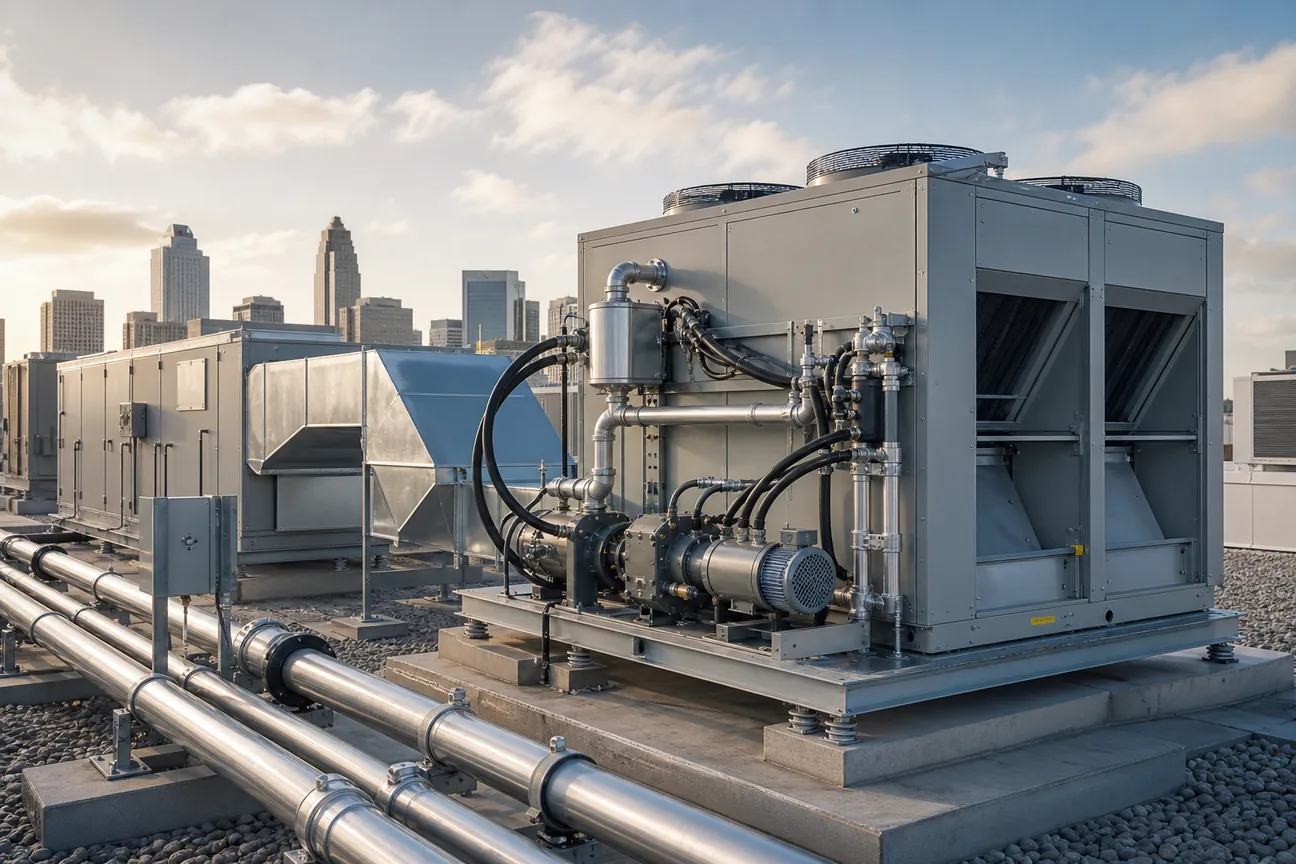

In industrial and mobile equipment heating solutions, most systems generally use water or glycol mixtures for fluid. Although water is the most efficient liquid for heat transfer, it freezes – for this reason, many industries prefer glycol. If you’re trying to achieve better temperature control, maintain a certain temperature, or protect pipes and equipment from freezing, glycol is a suitable fluid for all of the above and more.
What is glycol?
Glycol is an organic, odourless, colourless, and flammable organic compound that is categorized into two separate types: ethylene glycol (commonly used as antifreeze) and propylene glycol (a non-toxic preservative and moisture-retaining agent that’s widely used in consumables).
Glycol is used to heat or cool a building and help equipment work more efficiently. Much like fuel and fluid heat exchangers, glycol to air heat exchangers passes one fluid to another without mixing together. Glycol, a chemical compound in the alcohol family, is safe to use in frigid temperatures without freezing.
HVAC applications that commonly use glycol include:
- Snow and ice melting systems
- Solar water heating systems
- Ground source heat pumps
- Chilled water-cooling systems
- Hydronic systems
Why use glycol as a heating solution?
Some of the benefits of using glycol to air heat exchangers include the following:
- They have a higher boiling point than water, making them ideal for high-temperature applications.
- It can withstand colder temperatures, making glycol an excellent option for freeze protection.
- More cost-efficient than water as the greater temperature range and the lower freezing point does not require the heater to run as often.
- Unlike water, glycol does not freeze but instead turns into a slush, allowing the fluid to continue to flow.
- Glycol is a less viscous fluid that provides rapid heat transfer.
- Efficient heating reduces operational costs and energy consumption.
- A stable, high temperature prevents chemical degradation and, thus, prevents system corrosion.
- Industrial-grade glycol is formulated with anti-corrosive additives that eliminate corrosion and reduces maintenance costs.
Where to find glycol to air heat exchangers
Different glycol levels are needed depending on each system’s locations, types, and specific requirements. At Polar Mobility, we provide glycol to air heat exchangers and can customize a solution for your specific worksite or equipment. Browse our online catalogue or give us a call, and we can help.