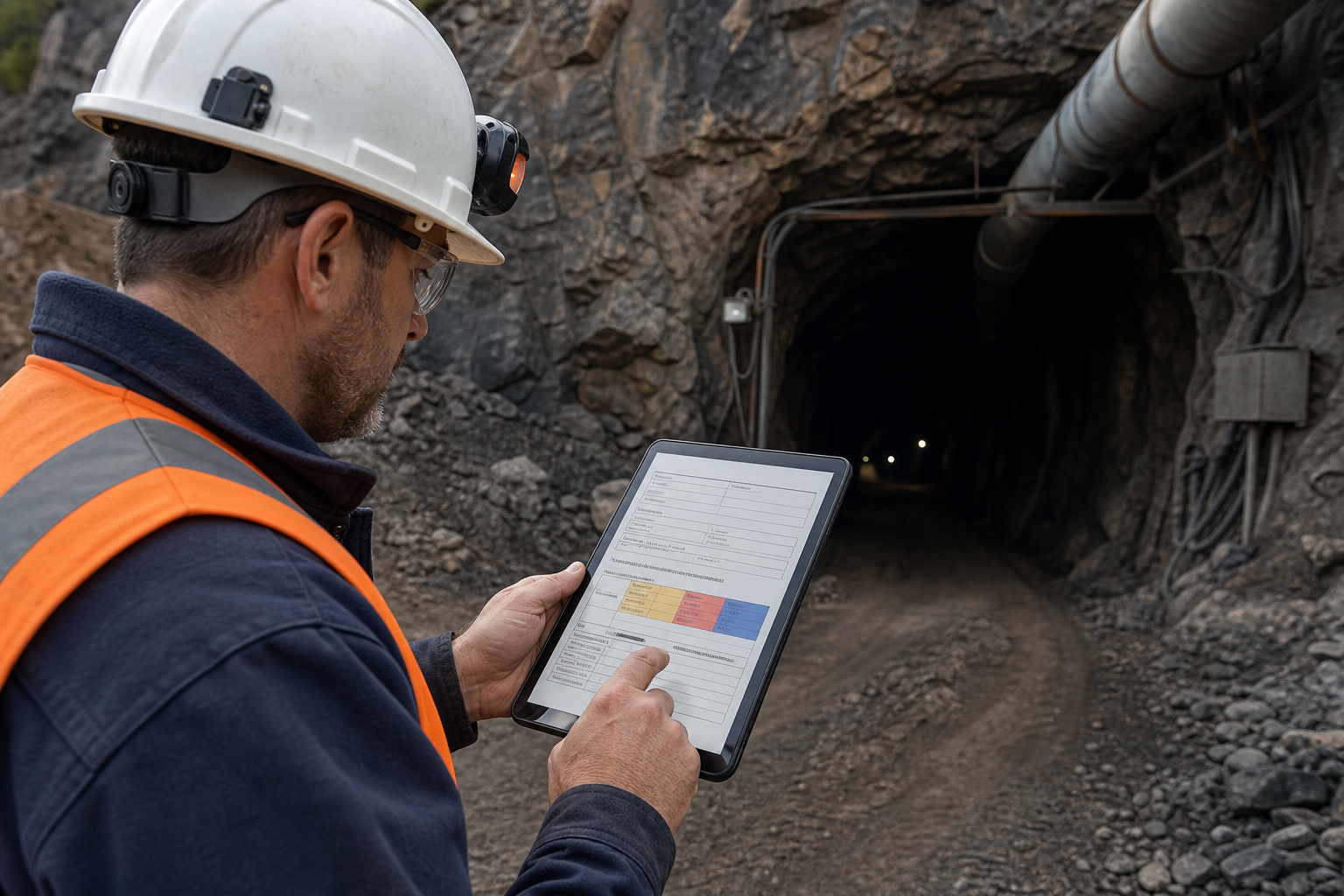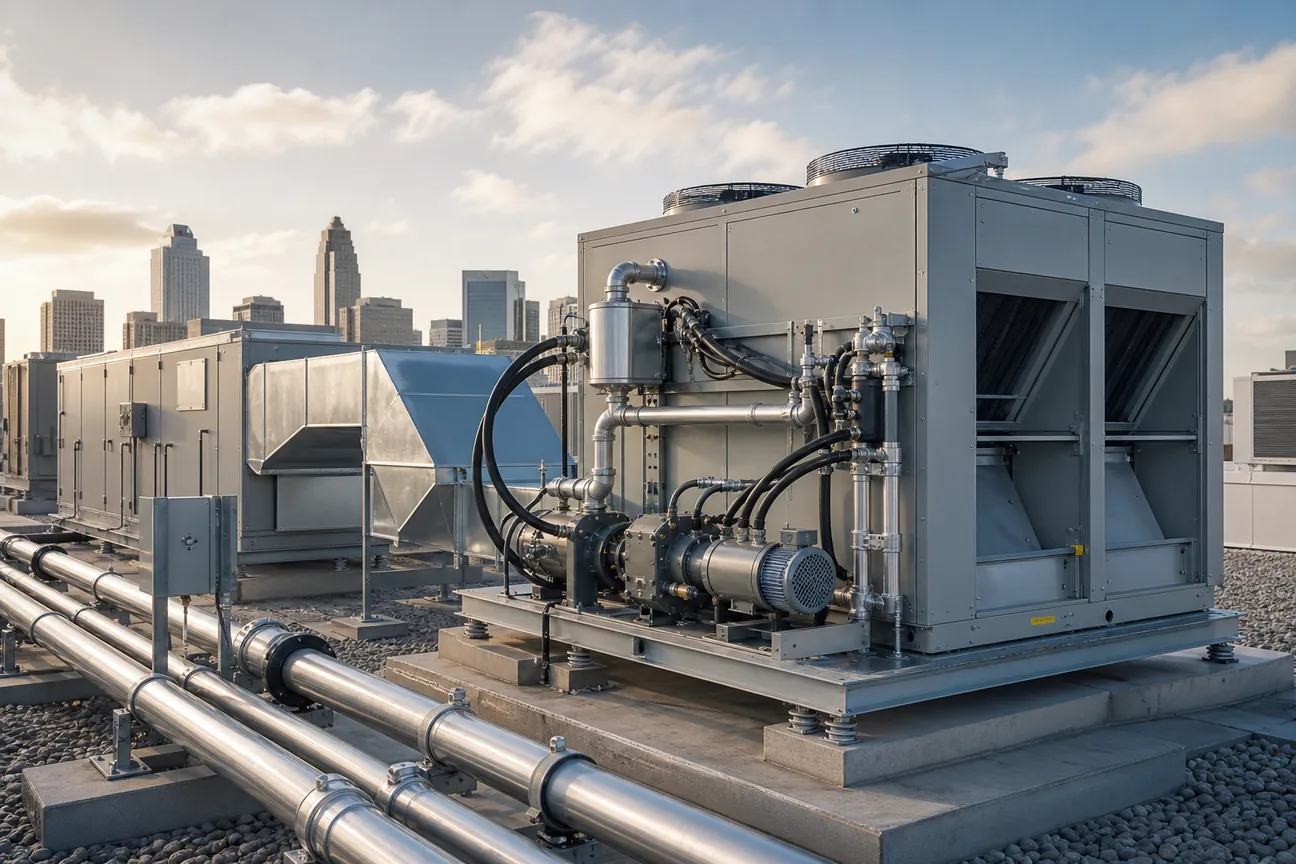

Operator air quality in mining and heavy equipment cabs is not a comfort issue , it’s a compliance issue and, in high-silica environments, a life-safety one. CF2 cab pressurizers address it directly by combining precleaning, high-efficiency filtration, and positive-pressure delivery into a single unit. This review covers how they perform across filtration stages, regulatory standards, platform integration, and long-term durability , so your procurement or fleet team can make a grounded decision.
1. Polar Mobility Research Ltd. (Our Top Pick)
We build and supply CF2 cab pressurizer systems purpose-built for extreme-condition fleets. Our RESPA-CF2 systems integrate a powered precleaner, high-efficiency filter, and pressurizer into one compact, field-configurable unit , and we back every build with direct technical support from our Canadian engineering team.
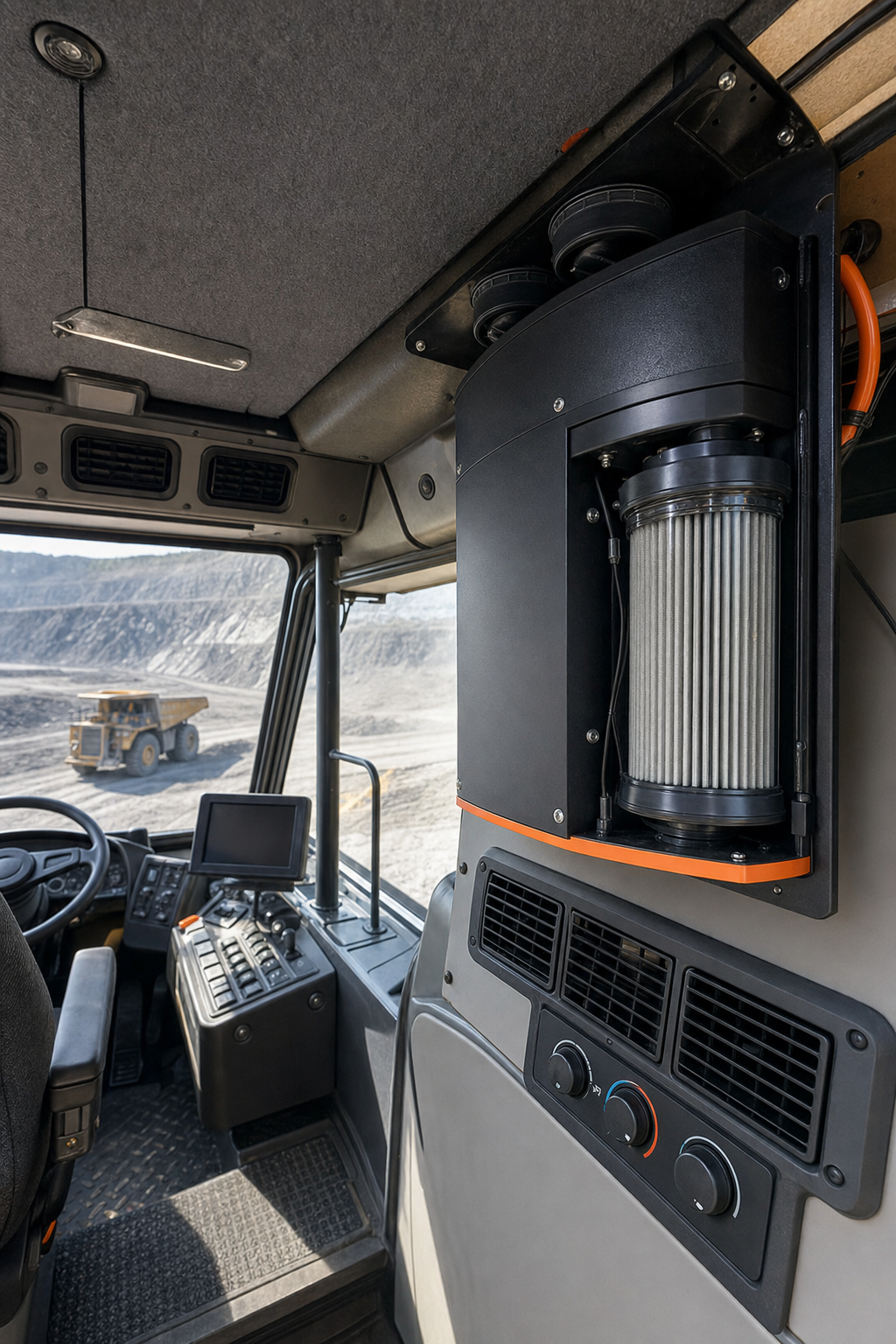
What sets our approach apart is configurability without compromise. The RESPA-CF2 removes over 90% of the largest dust and debris particles before they reach the main filtration stage. What remains , the finest respirable fraction , gets captured by MERV 16, EPA, or H13 HEPA-grade media depending on the exposure profile of your site. That’s not a one-size claim. We match filter grade to the hazard: diesel particulate matter (DPM) in underground mines calls for a different configuration than grain dust on an agricultural site.
Our systems maintain continuous positive cab pressure. That pressure differential , higher inside the cab than outside , is the mechanism that stops contaminated air from infiltrating through door seals, window frames, and structural gaps. It’s physics, not marketing. And it means the filtration system works even when operators open and close doors during shift.
We also supply the RESPA-CF2 as part of integrated wall-mount HVAC packages. The P-5230 modular wall-mount HVAC unit includes an integral CF2 pressurizer and CFX return air filters in a single flush-mount assembly , useful for large enclosed cabs or modular operator stations where space and cable routing are constrained.
Procurement teams working across mixed fleets will find our retrofit capability relevant. We work from OEM mounting specs and, when no bracket solution exists off the shelf, we fabricate one. If it doesn’t exist, we build it. That’s not a slogan , it’s how we handle non-standard equipment platforms that other suppliers pass on.
One honest caveat: lead times on custom-configured units can extend to several weeks depending on filter spec and housing geometry. Fleets running a single platform type with high unit volume should discuss stocking arrangements with our team upfront.
CF2 Filtration Performance: HEPA, Activated Carbon, and Multi-Stage Systems
The CF2 designation describes a specific architecture: a fresh-air precleaner combined with a pressurizer and a high-efficiency filter in one housing. Understanding what happens at each stage matters because filtration failure almost always starts at the stage people overlook , usually the pre-filter.
Stage 1: Precleaning and Centrifugal Separation
Before any particle reaches the main filter media, CF2 systems use centrifugal precleaning to eject the bulk of coarse dust and debris. The RESPA technology inside our units removes over 90% of the largest particles this way. Those particles never load the main filter , they’re ejected out of the system continuously. The usable result is that the high-efficiency filter sees only the finest respirable fraction, which extends filter life significantly in high-dust environments like open-pit mines or quarry faces.
This self-cleaning behaviour matters in continuous-operation equipment. A haul truck running two 12-hour shifts per day can’t afford a filter restriction event mid-cycle. The ejective design keeps airflow consistent without manual intervention between scheduled maintenance intervals.
Stage 2: High-Efficiency Filter Media
After precleaning, air passes through the main filter. CF2 systems are available with MERV 16 media (F9 grade under EN 779), EPA-grade media, or H13 HEPA media capturing at least 99.97% of 0.3-micron particles. That sub-micron capability is what makes the difference for respirable crystalline silica (RCS) and DPM , both of which sit in the 0.1 to 2.5-micron range where standard filters fail.
The CF MERV 16 ejective filter (FEFF218) is the standard replacement media for RESPA CF and CF2 fresh-air filter products and is stocked by Polar Mobility Research Ltd. for rapid turnaround. Keeping spares on-site is straightforward because the filter housing uses a tool-free swap design on most configurations.
Stage 3: Activated Carbon and Gas-Phase Filtration
In underground mining or industrial environments where chemical vapours, nitrogen oxides, or carbon monoxide are a concern alongside particulates, CF2 systems can be paired with activated carbon filter stages. Carbon adsorption targets gaseous contaminants that particle media can’t capture. Activated carbon works through adsorption , molecules bind to the carbon surface rather than being mechanically filtered , making it effective against volatile organic compounds and certain inorganic gases at concentrations typical of diesel-powered equipment operations.
The combination of mechanical filtration for particles and activated carbon for gases gives a complete air quality solution inside a single cab. That matters for ISO 23875 compliance, which addresses both particulate and CO₂ exposure in operator enclosures.
MSHA and ISO 23875 Compliance: How CF2 Systems Meet Regulatory Standards
Regulatory compliance for cab air quality in mining sits at the intersection of two frameworks: MSHA requirements in North American underground and surface mines, and the international ISO 23875 standard that governs operator enclosure air quality for heavy mobile equipment.
ISO 23875: What It Actually Requires
ISO 23875 was published in 2021 and updated in 2022. It’s an international standard that sets a consistent framework for designing, testing, operating, and maintaining air quality control systems in heavy machinery cabs, with specific application to mining equipment. The standard addresses both respirable particulate reduction and CO₂ management , two distinct exposure pathways that require different engineering controls.
For a CF2 system to support ISO 23875 compliance, it needs to demonstrate measurable reduction in respirable particulate inside the cab relative to ambient conditions outside, maintain adequate fresh-air delivery rates to control CO₂ buildup, and operate within defined maintenance intervals without performance degradation. The standard doesn’t just specify filter grade , it specifies system performance under test conditions representative of real working environments.
MSHA Cab Pressurization Requirements
MSHA’s cab pressurization guidance addresses dust exposure reduction in surface and underground mining equipment. The core principle is the same as ISO 23875: a positively pressurized cab with filtered air supply reduces operator exposure to airborne hazards. CF2 systems meet this by actively pressurizing the cab enclosure , the air flowing in exceeds the air leaking out, so any infiltration pathway becomes an exfiltration pathway instead.
For operations subject to MSHA inspection, documentation of filter specification, maintenance intervals, and cab pressure monitoring is important. Polar Mobility Research Ltd. can supply technical data sheets that support compliance documentation for site audits. Our systems are designed with ISO 23875 as a baseline, which means they meet or exceed MSHA’s operational requirements for pressurized cab systems.
Pressure and CO₂ Monitoring
A complete cab air quality system under ISO 23875 includes a pressure and CO₂ monitor alongside the filtration hardware. Pressure monitoring confirms the cab maintains positive pressure throughout the shift. CO₂ monitoring ensures fresh-air delivery rates are sufficient to prevent operator cognitive impairment from accumulated exhaled breath in a sealed cab. These monitors close the loop between equipment specification and actual operator exposure , and they generate the audit trail that safety officers need.
Hydraulic-Driven Integration: CF2 Pressurizer Compatibility With Heavy Equipment Platforms
Most heavy mining equipment , haul trucks, excavators, dozers, motor graders , runs hydraulic systems as primary or auxiliary power for attachments and accessories. CF2 pressurizers in these environments are typically electrically driven (12V or 24V DC from the machine’s electrical system), but understanding how the pressurizer interacts with the broader HVAC and electrical architecture matters for correct integration.
Electrical vs. Hydraulic Drive Configurations
Standard RESPA CF2 units use a brushed or brushless DC motor , 12V or 24V depending on the machine platform , to drive the precleaner fan and pressurize the cab. The motor draws relatively low amperage and integrates with the machine’s existing electrical system through a direct-wire connection. For equipment with a dedicated auxiliary power circuit, this is a simple installation.
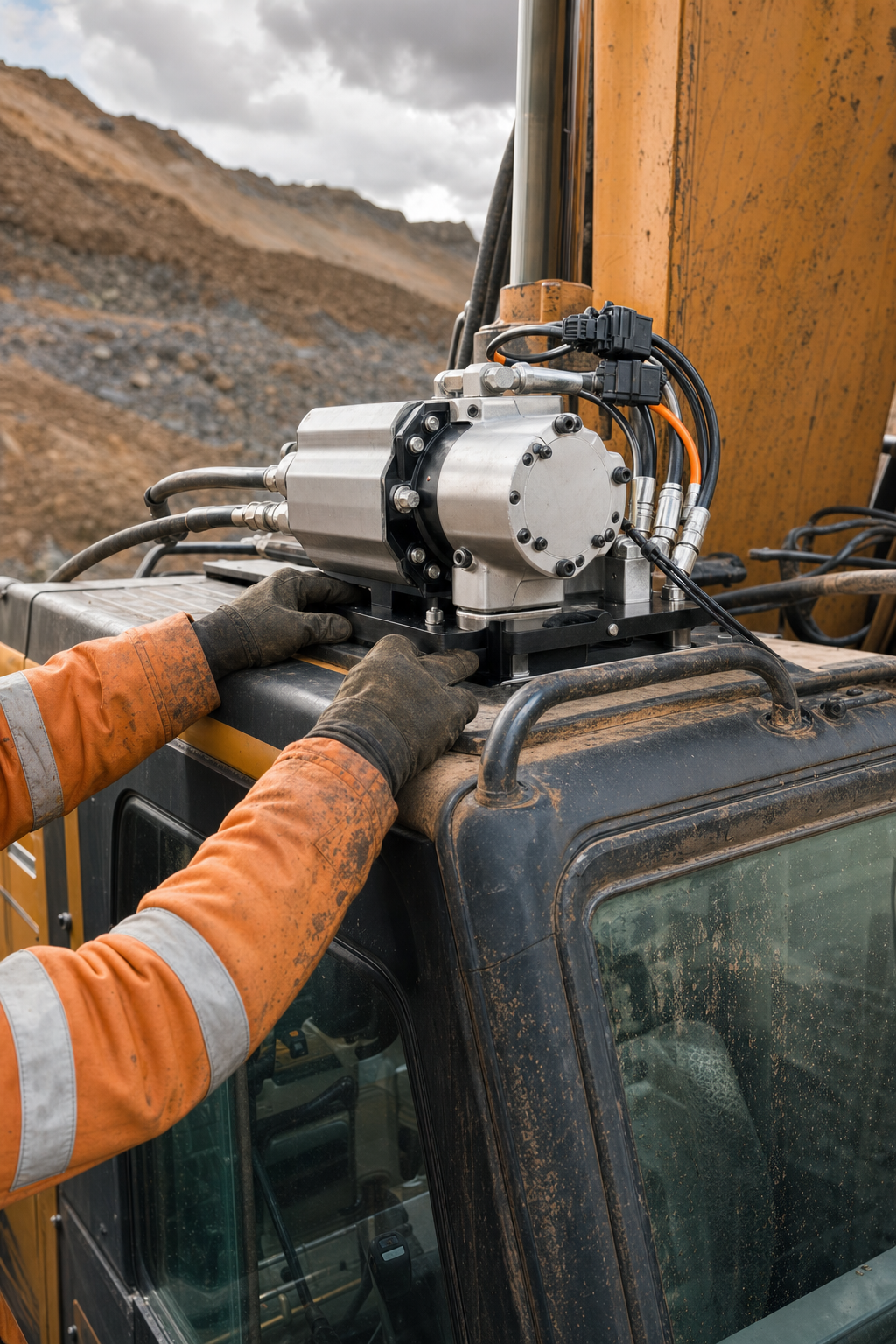
On some large equipment platforms where the electrical load budget is tight or where the cab HVAC system is independently powered (as in some modular enclosed operator stations), hydraulic-driven motor configurations are available. A hydraulic motor replaces the DC motor, drawing from the machine’s hydraulic circuit rather than the battery or alternator. This approach is relevant when the equipment already runs hydraulic accessories continuously and the electrical system is at capacity. Sizing the hydraulic motor correctly requires knowing circuit pressure and flow rates from the OEM spec sheet.
Platform Compatibility Across Fleet Types
CF2 pressurizers mount externally to the cab , typically on the roof or a side bracket , with a filtered air duct passing through the cab wall into the HVAC intake. This external mounting means the pressurizer can be retrofitted to almost any enclosed cab without internal rework. The physical interface is a duct penetration and a bracket. Remote-mount configurations, where the pressurizer sits away from the cab and delivers air via duct, suit equipment where cab roof space is limited or where vibration at the cab surface is unusually high.
For fleet maintenance managers working across mixed equipment types , say, a site running both 100-tonne haul trucks and mid-size excavators , the same CF2 filter media can work across multiple housing configurations. That standardises the consumable inventory, which reduces stocking complexity. Polar Mobility Research Ltd. works with procurement teams to map filter SKUs across their specific fleet mix before the first order. Understanding how cab enclosure filter pressurizers work across platform types is covered in detail in our cabin enclosure filter pressurizers guide, which covers measurement, maintenance intervals, and common failure modes.
Integration With Existing HVAC Systems
CF2 pressurizers deliver filtered fresh air to the HVAC intake, not directly to the cab interior. This protects the evaporator core from dust loading , a separate maintenance problem that drives expensive HVAC repairs on equipment operating in high-dust environments. Clean air at the HVAC intake means the evaporator coil stays cleaner longer, heat exchange efficiency stays higher, and the interval between HVAC service events extends. On a 200-machine fleet, that’s a material maintenance cost reduction per year.
Durability and Reliability in Extreme Conditions: Heat, Dust, and Vibration
A cab pressurizer that performs well in a controlled test environment but degrades after six months in a Pilbara iron ore mine or a Canadian oil sands operation is not a useful product. The durability question has three dimensions: thermal tolerance, dust ingestion handling, and vibration resistance.
Thermal Tolerance
Mining and construction equipment operates in ambient temperatures that swing from sub-zero Arctic starts to 50°C surface conditions in tropical open-pit operations. CF2 pressurizer housings are built from materials selected for this range. The motor and electronics inside the unit need to handle both cold-start conditions , where bearing lubricants thicken and plastic components contract , and sustained high-temperature operation where heat soak from the cab roof or engine bay raises component temperatures well above ambient.
Filter media selection also affects thermal performance. Synthetic depth-loading nonwoven media handles temperature cycling better than surface-loading paper filters, which can crack or delaminate at extremes. This is one reason standard automotive cabin filters are not appropriate for heavy equipment applications , the duty cycle and temperature range are simply different categories of problem.
Dust Ingestion and Self-Cleaning
The RESPA CF2’s precleaning stage continuously ejects coarse particles rather than accumulating them on the filter surface. This self-cleaning behaviour is the primary reason filter life in high-dust environments is meaningfully longer than with conventional filter-only designs. The filter housing also sheds dust and debris, preventing the bridging that can cause sudden flow restriction in conventional filter arrangements.
In usable terms: a conventional filter on a surface coal mine haul truck might need replacement every few weeks during peak production. A CF2 system with the ejective precleaner in the same environment can extend that interval substantially, depending on ambient dust concentration and airflow rate. Maintenance managers should still track cab pressure readings to catch filter restriction before it causes a compliance gap , but the frequency of intervention drops.
Vibration Resistance
Heavy equipment generates significant vibration at the cab mounting points , particularly dozers and compactors on rough terrain. CF2 pressurizer units mount externally and need secure bracket engineering to avoid loosening over time. Motor bearings, electrical connectors, and filter housing latches are the typical failure points in high-vibration applications. Specifying units with vibration-rated connectors and locking filter latches from the outset avoids field failures that are difficult to diagnose when the equipment is remote from the maintenance workshop.
CF2 Cab Pressurizer Specifications Compared: Key Performance Metrics at a Glance
The table below compares key performance parameters across CF2 pressurizer configurations relevant to heavy-duty mining and industrial fleets. These figures reflect the RESPA CF2 product family and general industry benchmarks for this equipment category. Consult Polar Mobility Research Ltd. for site-specific configuration advice before specifying.
The most common specification error we see is selecting filter grade based on cost rather than the site’s industrial hygiene exposure assessment. MERV 16 is adequate for many surface operations. For underground diesel environments where DPM is the primary hazard, EPA or H13 HEPA media is the correct starting point , not an upgrade.
FAQ
What does a CF2 cab pressurizer actually do?
A CF2 cab pressurizer draws outside air through a centrifugal precleaner that ejects coarse particles, then passes the remaining air through a high-efficiency filter before delivering it into the cab. This continuous airflow builds positive pressure inside the enclosure, which stops contaminated outside air from seeping through door seals and structural gaps. The result is lower respirable dust and particulate exposure for the operator throughout the shift.
How often do CF2 filter elements need replacing?
Replacement interval depends on ambient dust concentration and airflow rate at your site. The ejective precleaner stage in CF2 systems extends filter life by removing the bulk of coarse particles before they load the main media. In high-dust surface mining environments, intervals are longer than with conventional filter-only designs. Track cab pressure readings , a rising restriction reading is a reliable indicator that the main filter element needs replacing, regardless of calendar interval.
Is a CF2 pressurizer enough on its own for ISO 23875 compliance?
No. ISO 23875 requires a complete cab air quality system, which includes fresh-air precleaning and filtration, high-efficiency recirculation filtration, and a pressure and CO₂ monitor. The CF2 pressurizer covers the fresh-air intake and filtration function. Full compliance also needs the recirculation filter stage and the monitoring hardware. Polar Mobility Research Ltd. supplies complete system configurations that address all three components.
Can CF2 pressurizers be retrofitted to older equipment?
Yes. CF2 systems mount externally to the cab roof or a side bracket, with a duct penetration into the HVAC intake. This physical interface means retrofits are possible on most enclosed cabs without major internal modification. Non-standard platforms may need a custom bracket, which Polar Mobility Research Ltd. fabricates when no off-the-shelf solution fits. Confirm cab wall thickness and HVAC intake location before ordering to avoid installation delays.
What is the difference between MERV 16, EPA, and H13 HEPA filter grades in a CF2 system?
MERV 16 (F9) captures roughly 95% of 0.3-micron particles and suits most surface mining and construction applications. EPA-grade media reaches approximately 99.5% at the same particle size and is appropriate for underground diesel environments. H13 HEPA captures at least 99.97% of 0.3-micron particles and is the correct specification for high-silica or high-DPM exposures where occupational exposure limits are tightest. Site hazard assessment should drive the selection.
Do CF2 pressurizers work with hydraulic-powered equipment?
Standard CF2 units use a 12V or 24V DC motor powered from the machine’s electrical system. On platforms where the electrical load budget is fully committed, hydraulic motor configurations are available. A hydraulic motor draws from the machine’s existing hydraulic circuit rather than the electrical system. Correct sizing requires the OEM hydraulic circuit pressure and flow specifications. Polar Mobility Research Ltd. can advise on hydraulic motor selection for specific platform types.
Conclusion
CF2 cab pressurizer systems give mining and heavy equipment operators measurable protection against respirable hazards , when specified correctly for the site exposure profile and maintained to the intervals the system is designed for. If you’re evaluating options for your fleet, the right next step is a site-specific conversation about filter grade, platform compatibility, and ISO 23875 compliance scope. Contact Polar Mobility Research Ltd. to discuss your fleet requirements and get a configuration recommendation grounded in your actual exposure data.