
A sealed operator cab can look clean while CO2 rises around the person doing the work. That can affect alertness before anyone sees a dust problem. We’ll show you how to set up ISO 23875 cabin air controls, verify real-time CO2 monitoring, and keep the system ready for an audit. The ISO 23875 cab air quality requirements provide the technical framework for sustained pressurisation and CO2 control.
The standard covers the full machine life cycle. Design, retrofit work, testing, operation, and maintenance all matter. Start with the baseline, then build the air system around measured performance.
Step 1: Establish the ISO 23875 Baseline for the Operator Cabin
The first goal is to record what the cab does before you change it. ISO 23875 focuses on two exposure paths: respirable particulate matter entering the enclosure and CO2 building up from the operator’s breath.
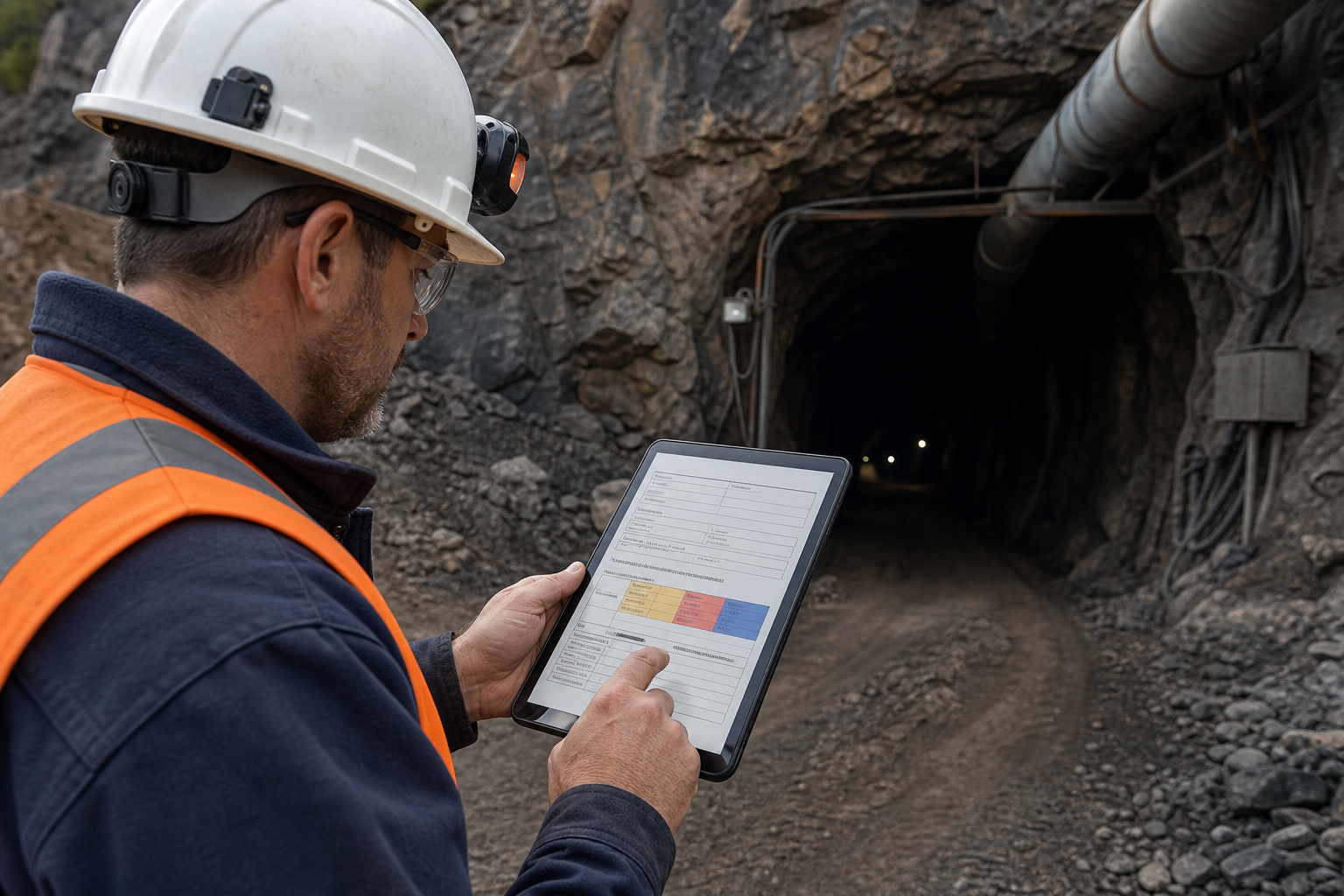
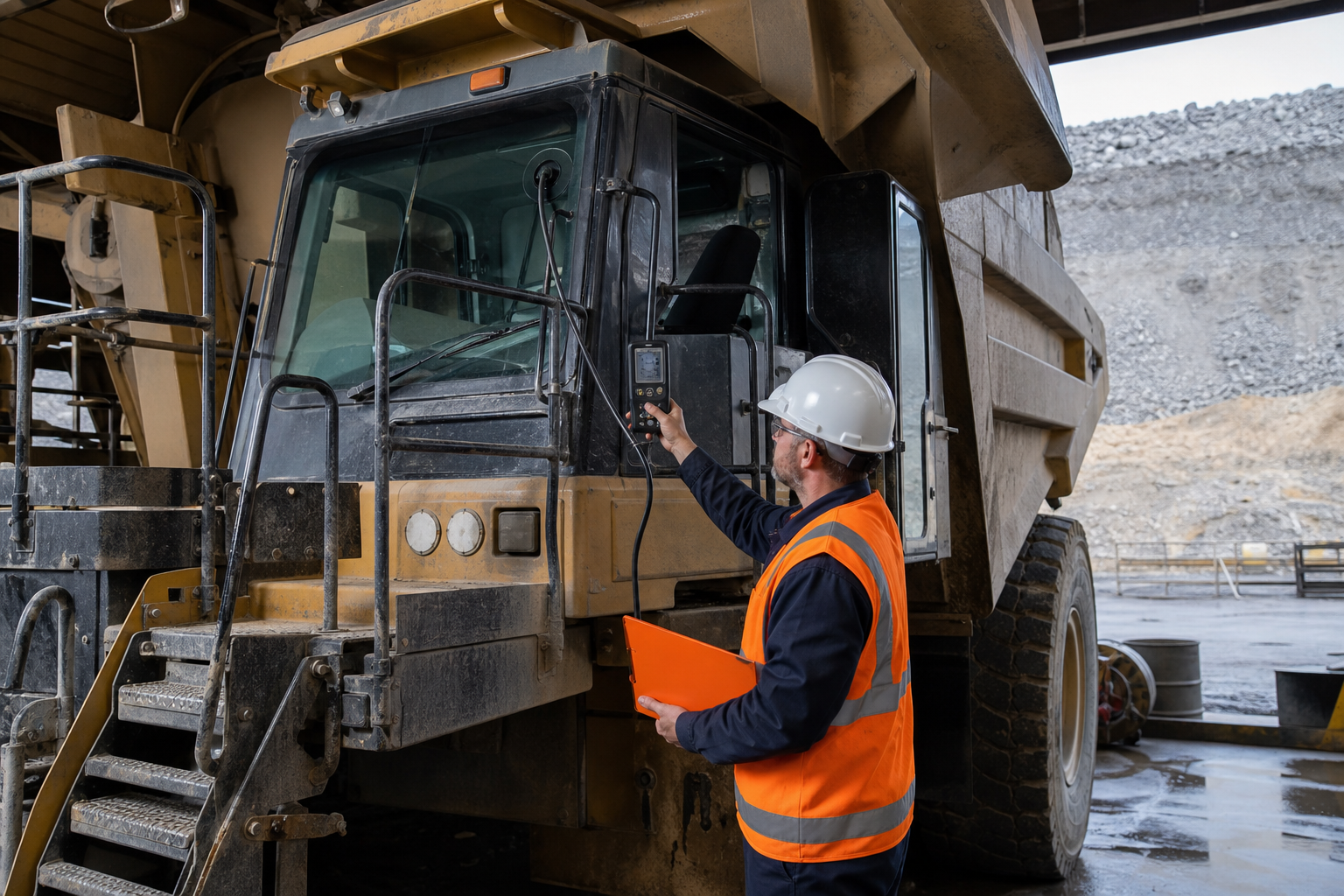
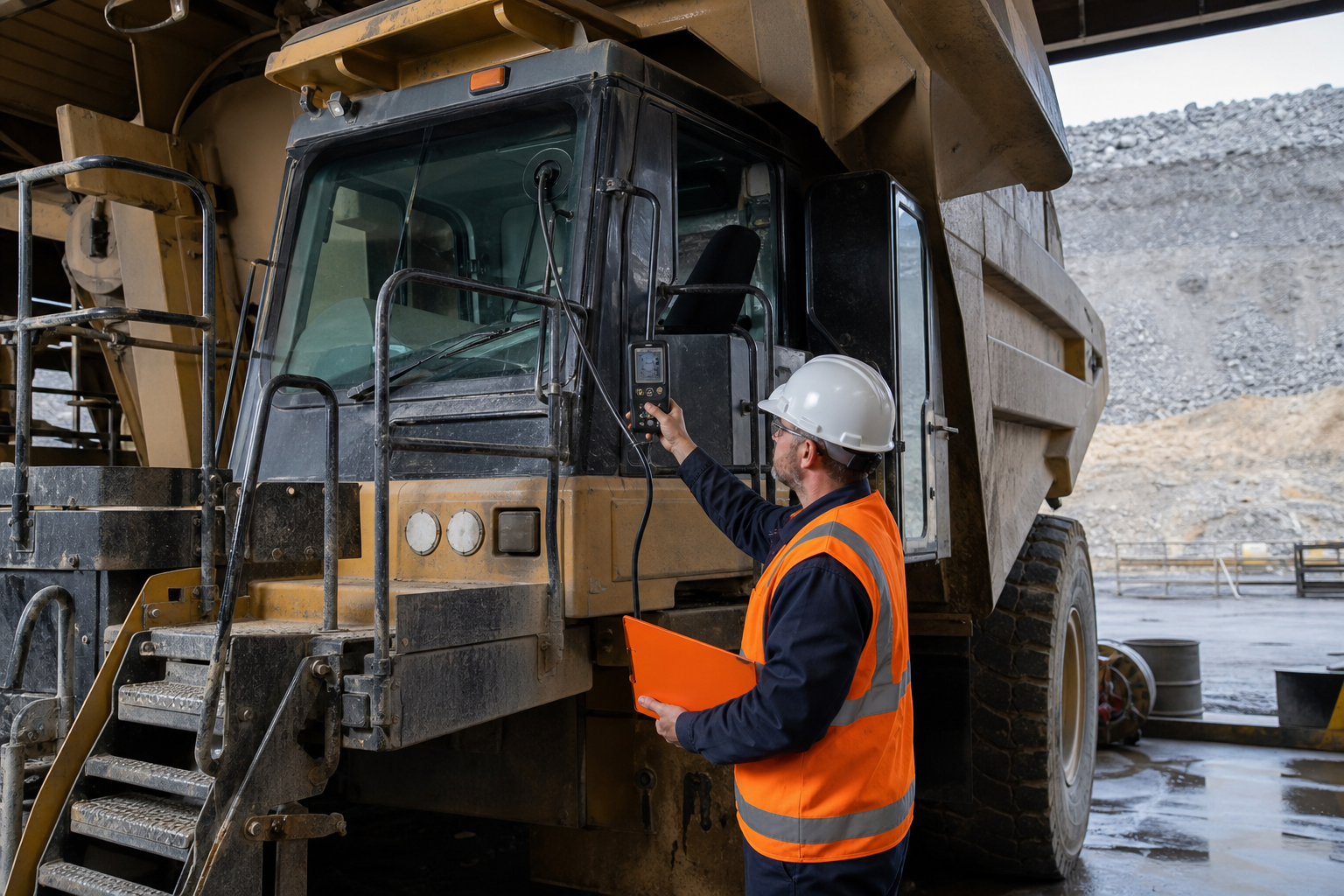
Begin with the machine key in the “on” position. Check the cab at idle, during normal travel, and during the work cycle that creates the most dust. Record ambient CO2 outside the machine at the same time as cabin CO2. This gives you a proper comparison instead of a single isolated reading.
For the stated ISO 23875 performance targets, cabin CO2 should stay at or below ambient CO2 plus 400 parts per million. The cab should also maintain positive pressure between 20 Pa and 200 Pa. Pa means pascals, the pressure unit used to measure the difference between cabin air and outside air.
Inspect every likely leak path before blaming the filter. Look at door seals, window seals, cable entries, duct joints, floor plates, and fresh-air intake areas. Check for dust trails. A narrow line of dust near a seal can show where outside air is entering.
Record the current filter type, installation date, pressure readings, alarm status, and service history. Include the machine model and cab configuration. Polar Mobility Research Ltd. can use this baseline to assess whether the right answer is a new system, a retrofit, or a repair to the existing enclosure.
ISO standards provide agreed technical requirements for repeatable design and assessment. For reference, see the standards overview. The standard itself does not replace local law, mine rules, or regulator direction. Treat it as the engineering benchmark, then check the rules that apply to your site.
By now you should have a machine-specific test sheet and a clear list of failures. Do not select a pressurizer until you know the cab’s leakage points and airflow needs.
Step 2: Design Filtration, Pressurisation, and Sensor Placement
Real-time monitoring only helps when the air system can act on what the sensor sees. Design filtration and pressurisation first, then place the CO2 sensor where its reading reflects the operator’s breathing zone.
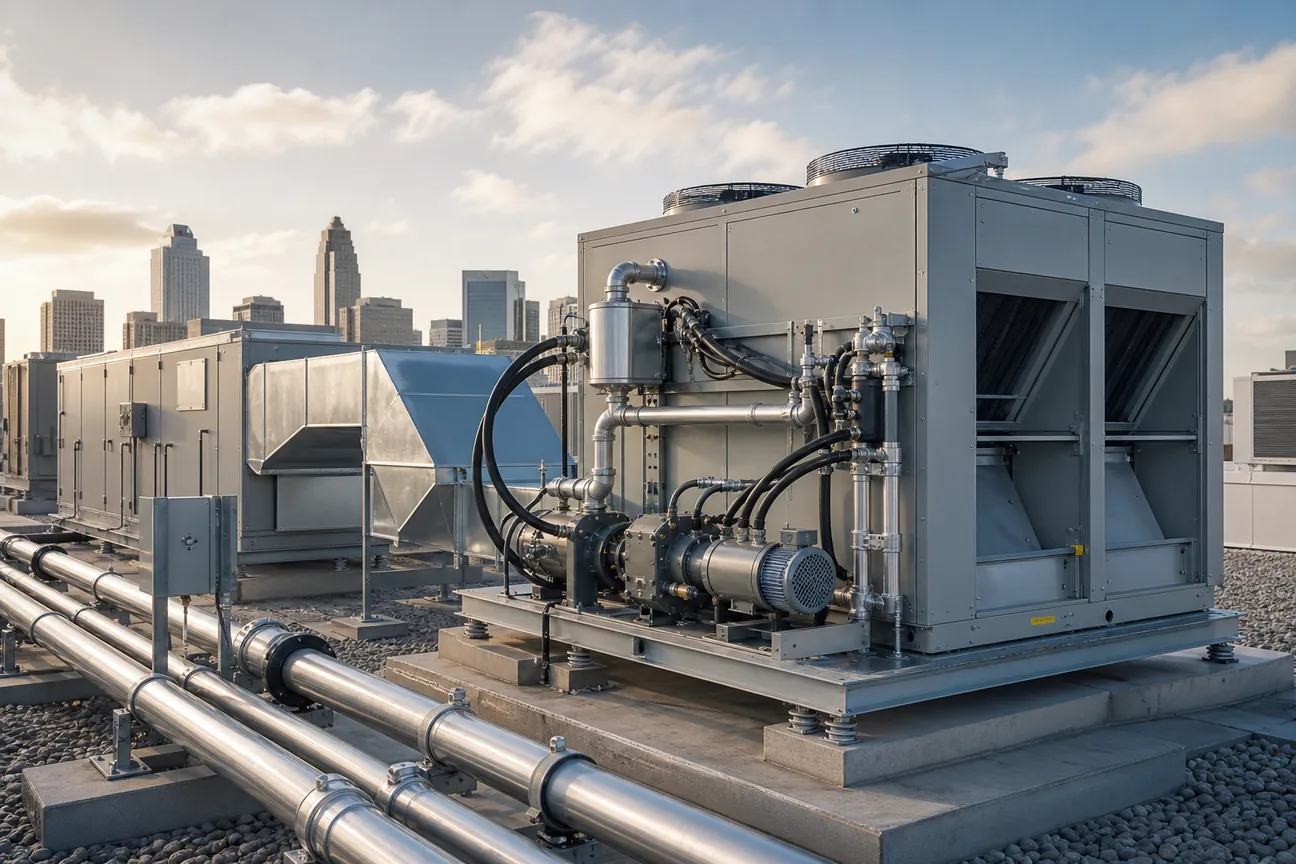
Use a fresh-air path that draws from a suitable intake location. A cab air pre-cleaner removes coarse dust before air reaches the main filter. High-efficiency filtration then removes finer particles. Recirculated air may need its own filter stage because dust can enter on clothing or during door openings.
Positive pressure protects the cab by pushing air outward through small gaps. It cannot fix a damaged door seal or a cracked duct. Seal the enclosure, size the blower for the cab’s leakage rate, and check that pressure stays within the target range while the machine is working.
Place the CO2 sensor inside the cab near the operator’s breathing zone, but keep it away from a direct supply-air jet. Do not mount it beside an open door, an exhaust path, or a heater outlet. Those spots can produce readings that do not represent the air the operator breathes.
Use a sensor with a stable measurement method suited to vibration, temperature swings, dust, and condensation. Non-dispersive infrared sensors are common for CO2 measurement because they detect gas through infrared absorption. The final choice should match the supplier’s temperature range, calibration method, response time, and maintenance instructions.
Install a second measurement point outside the cab when the system design allows it. Comparing ambient and cabin readings helps the maintenance team see whether a rise comes from poor fresh-air delivery or a change in outside conditions.
Monitoring should be visible from the seat. It should also give an audible warning when the operator needs to act. Polar Mobility Research Ltd. designs custom heating, cooling, filtration, and monitoring systems for heavy-duty equipment, including hydraulic-driven systems for harsh sites. If the existing arrangement does not fit the machine, if it doesn’t exist, we’ll build it around the cab and duty cycle.
Keep the sensor wiring separate from circuits that create electrical noise. Protect cables from pinch points and hydraulic heat. Mark the sensor location in the maintenance manual so a future repair does not move it to a convenient but poor location.
By now you should have an airflow diagram, a sensor map, a filter schedule, and a plan for visible and audible alarms.
Step 3: Retrofit Existing Cabins and Configure Real-Time Alerts
A retrofit starts with the enclosure, not the monitor. ISO 23875 operator cabin CO2 real-time monitoring is only useful when fresh air reaches the cab and contaminated air cannot enter through avoidable gaps.
First, inspect the protective structure and the manufacturer’s approved mounting points. Do not drill or alter a protective structure without the required approval. Next, repair seals and duct joints. Then mount the pressurizer and intake where the system can draw cleaner outside air without pulling engine exhaust or heavy dust into the cabin.
Fit the filter stages with enough airflow for the cab. A filter that traps dust but blocks too much air can raise CO2 because fresh-air delivery falls. A filter with low restriction but poor capture can leave the operator exposed to fine dust. The system needs both air quality and airflow.
Connect the CO2 sensor to a display that the operator can read without leaving the seat. Use clear status states. A green state can show normal operation. Amber can prompt inspection or reduced exposure. Red should demand a defined response under the site procedure.
Use the thresholds specified by the approved system design and site risk assessment, while basing the performance limit on ambient CO2 plus 400 ppm. Do not treat a fixed alarm value as a substitute for the ambient comparison.
Set alarm actions before commissioning. For example, an amber alarm may require the operator to check doors and report the event. A red alarm may require the machine to leave the dusty zone, stop work, or move to a safe area. The correct action depends on the mine’s control plan.
Data logging turns an alarm into a maintenance clue. Store CO2, pressure, machine hours, alarm state, and service events together. A trend that rises near the end of every shift may point to a filter restriction or weak fresh-air delivery. A sudden pressure drop may point to a damaged seal.
For existing equipment, Polar Mobility Research Ltd. provides retrofit paths that combine pressurisation, filtration, monitoring, and decay testing. Retrofit work for heavy construction and mining equipment still needs machine-specific testing and approval; review the ISO 23875 air filtration systems page during planning. The final design still needs machine-specific testing and approval.
By now you should have a working retrofit, a defined alarm response, and a data record that links air quality to machine operation.
Step 4: Test, Document, and Maintain ISO 23875 Compliance
Testing proves that the cabin works under conditions close to its real duty. A commissioning sign-off alone is not enough. Dust, vibration, filter loading, seal wear, and service changes can alter performance. Testing protocols for heavy mining equipment in extreme conditions should account for these environmental stresses.
Start with a pre-test inspection. Confirm the filter is seated correctly. Check the door seal. Verify that the intake is clear. Confirm the CO2 and pressure sensors show plausible values. Record the instrument identification and calibration status.
Run the CO2 test with an operator inside the cab or with a device that simulates human CO2 generation. Keep the cab in its normal operating state. Record ambient CO2 beside the cabin reading. Note the time needed for cabin CO2 to stabilise and the response of each alarm.
Run the pressure test with the machine key on. Check the minimum and maximum sustained pressure. Test at different fan settings if the cab has more than one operating mode. A system that passes at full fan speed but drops below 20 Pa at normal speed has not solved the operating problem.
Use a decay test to assess particulate control after the cab is challenged. Record the test method, ambient conditions, cab state, and result.
Keep the file with the machine. It should include:
- Cab identification and equipment hours
- Sensor calibration and alarm checks
- CO2, ambient CO2, pressure, and particulate results
- Filter part number, installation date, and replacement record
- Seal repairs, system changes, and approval records
- Corrective actions with a named owner and completion date
Health agencies treat respirable silica as a serious mining hazard, so particulate control belongs in the same maintenance plan as CO2 control. The use of engineering controls and exposure assessment supports particulate-risk management in mining work.
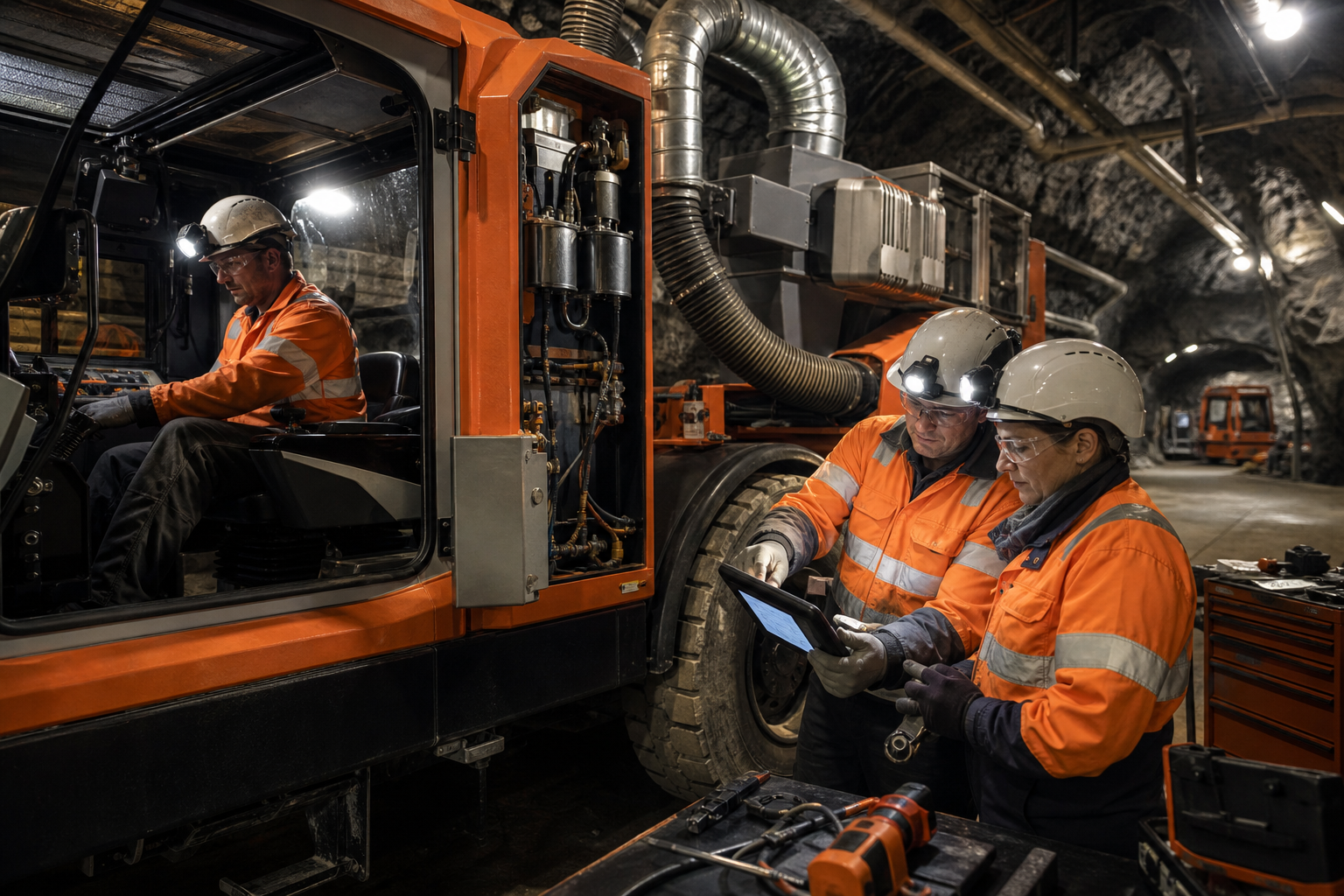
Set service intervals by filter loading, machine hours, site dust, and test results. Replace a filter when the approved schedule or pressure trend requires it. After any major repair, repeat the relevant performance tests before returning the machine to production.
By now you should have a signed test record, a live maintenance schedule, and a process that can show continued performance.
Step 5: Measure ROI and Improve Cabin Air Management with Operational Data
The business case for ISO 23875 cabin monitoring comes from avoided disruption and better control of known risks. Do not build it around a vague claim that “cleaner air is better.” Tie the system to work orders, alarm events, filter use, downtime, and inspection findings.
Start with a simple baseline. Count unscheduled air-system repairs. Record filter changes outside the planned interval. Track failed pressure tests, CO2 alarms, operator complaints, and machine downtime linked to cab air quality. Keep the period long enough to show a useful operating pattern.
After installation, compare the same measures. Look for fewer repeat seal repairs. Check whether maintenance teams catch filter restriction before a failed test. Review alarm logs by machine, shift, location, and work activity. A machine that alarms only in one haul route may need an intake change rather than a larger fan.
Data can also support fleet decisions. Rank machines by repeated low pressure, high CO2, or particulate test failure. Repair the highest-risk cabs first. Use the results to set spare filter stock and plan service during scheduled shutdowns.
Mine-wide integration should protect the operator’s immediate response, not bury the warning in a control room dashboard. The display in the cab remains primary. A remote signal can help supervisors see repeated alarms, but it should include machine identity, time, alarm type, and duration.
Regional rules still apply. In Canada, provincial or territorial requirements may differ by site. In the United States, mine operators also need to review applicable MSHA requirements. ISO 23875 can provide a common engineering method, but it does not erase a regulator’s legal duty or a mine’s own control plan.
For a procurement review, ask suppliers for more than a filter catalogue. Request the airflow design, pressure range, sensor specifications, alarm logic, test method, maintenance plan, and declaration documents. Polar Mobility Research Ltd. can work with procurement, fleet maintenance, and OHS teams to shape a system around the machine and the site. If it doesn’t exist, we’ll build it.
The strongest ROI case is usually a well-kept evidence trail. It lets you replace reactive repairs with planned work and gives the safety team records it can review during an internal audit.
Frequently Asked Questions
What does ISO 23875 require for cabin CO2 monitoring?
ISO 23875 requires ongoing control of CO2 inside operator enclosures, with monitoring that shows whether the cabin remains within the defined performance limits. The system also needs visible and audible warnings, testing, and maintenance records.
Where should a CO2 sensor be installed in a mining cab?
A CO2 sensor should sit inside the operator’s breathing zone, near the seat but away from direct supply air, heaters, doors, and exhaust paths. That placement gives a better reading of the air the operator breathes. Protect the wiring from vibration and heat, then document the location for future service work.
Can an existing operator cab be retrofitted?
Yes, an existing operator cab can be retrofitted when its structure and mounting points allow approved changes. The work usually starts with seals and intake paths, then adds filtration, pressurisation, sensors, alarms, and data logging. The finished cab still needs performance testing under operating conditions.
What happens when CO2 rises in a sealed operator cabin?
Rising CO2 can reduce alertness and contribute to fatigue or impaired focus. In a sealed cab, the operator’s exhaled CO2 accumulates when fresh-air delivery is too low. A real-time monitor gives the operator and supervisor a chance to act before the condition becomes a longer exposure event.
How often should ISO 23875 cabin air systems be tested?
Test the system at commissioning, after major repairs or design changes, and at the service intervals set by the site risk plan and equipment supplier. Repeat checks when pressure trends fall, CO2 rises, alarms fail, or filters load sooner than expected. Keep every result with the machine’s maintenance record.
Start with a measured baseline on one representative machine. Then have Polar Mobility Research Ltd. review the cab, design the control system, and verify the results through documented testing. That approach gives your operators a working warning system and gives your OHS team evidence that the controls remain in place.