
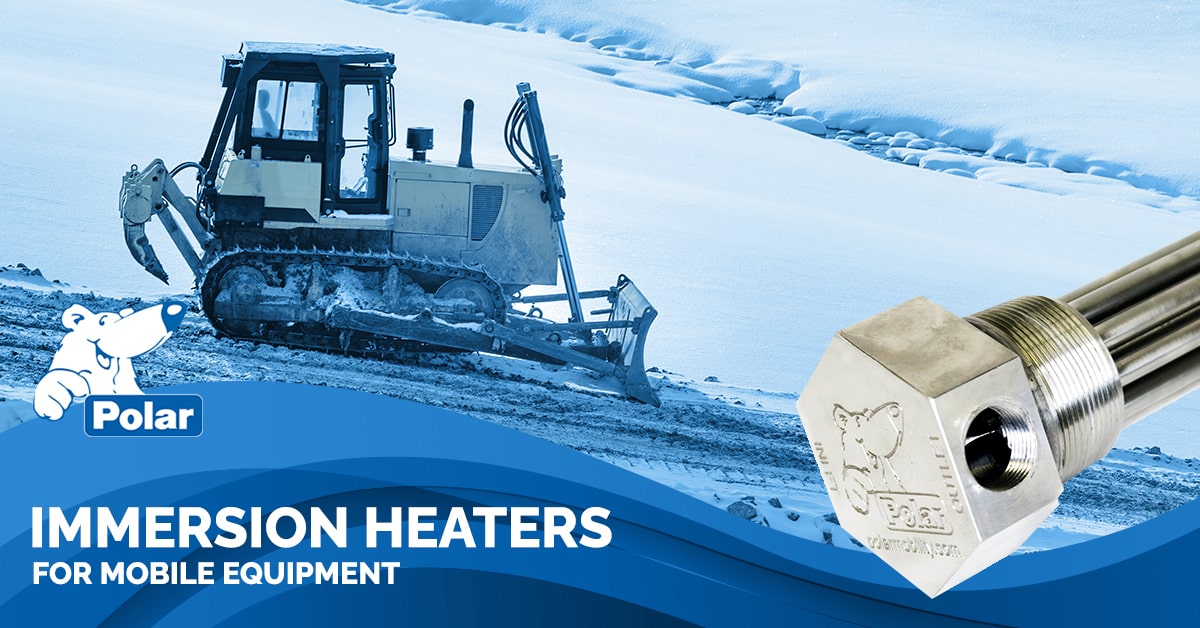
An immersion heater, also referred to as a hydraulic tank heater, hydraulic oil heater, or hydraulic fluid heater, is a cost-effective and eco-friendly method that can heat liquids and gases rapidly. For mobile equipment, immersion heaters are typically used for tanks, vats, barrels, and containers to heat material, maintain the perfect temperature, or reach the right viscosity.
Immersion heaters are used in many industries, including mining, nuclear power, oil and gas, food processing, wastewater management, agriculture, and more. This article focuses on immersion heaters for mobile equipment applications, including the different types of immersion heaters and where to find custom solutions that can be retrofitted to any equipment.
Most common types of immersion heaters
Since the introduction of the very first immersion heater, new innovations have emerged to meet different requirements and industry demands. The different types of immersion heaters are a long list, with new developments being introduced regularly. The most common types of immersion heaters include:
- Screw plug – A hairpin-shaped tubular electric element is placed directly into the tank wall or pipe for heating. Screw plug immersion heaters are ideal for small tanks with limited space or applications that require precise heating. They are commonly used for industrial tanks, barrels, and process piping for temperature control and protection.
- Over-the-side – These units can be mounted to a tank or vessel, making them ideal for water storage, maintaining the viscosity of fluids and wax, for freeze protection, and more. Over-the-side immersion heaters are used in many different industries as an effective heating solution for larger applications.
- Flange – Flange immersion heaters are bolted or welded to the outer wall of the tank and can reach high temperatures of up to 650 degrees Celsius. They are ideal for industrial process heating, boilers, oil, and other high-pressure heating applications. Flange heaters are long-lasting and offer a secure solution for heavy-duty jobs.
- Circulation – A circulation immersion heater uses an inline or side piping configuration with a built-in heating element. They are ideal for freeze protection as well as water, steam, air, and gas heating.
Mobile equipment applications for immersion heaters
With rising fuel costs, more and more industries are relying on immersion heaters for safe and efficient heating. Since immersion heaters do not use fuel or a flame to provide heat, they eliminate safety hazards, reduce operational costs, and improve a company’s carbon footprint. They also provide a cost-effective heating solution for industries that prohibit the use of flame and fuel.
Some of the most common mobile equipment applications for immersion heaters include:
Cement curing – Immersion heaters help speed up the cement curing process for the construction industry. Especially in Canada’s cold climate, over-the-side heaters help maintain the perfect viscosity and keep operations moving.
Transportation of chemicals – Immersion heaters are ideal for transporting hazardous chemicals without the safety risk of using fuel or flame. By using electricity, immersion heaters can keep chemicals at a stable temperature, protect them from freezing, and prevent contamination.
Oil and gas industry – Heavy-duty mobile equipment rely on immersion heaters to keep gas and oil from turning to gel in cold conditions. Over-the-side heaters are ideal when heaters cannot be installed into the wall of the container.
Where to find custom solutions for mobile equipment heating
At Polar Mobility, we stock an inventory of immersion heaters that can be used for mobile equipment. We can also help customize and retrofit a solution for your specific worksite or equipment. Whether you need to heat material quickly, maintain a specific temperature, or require freeze protection during Canada’s frigid winters, give us a call, and we can help.