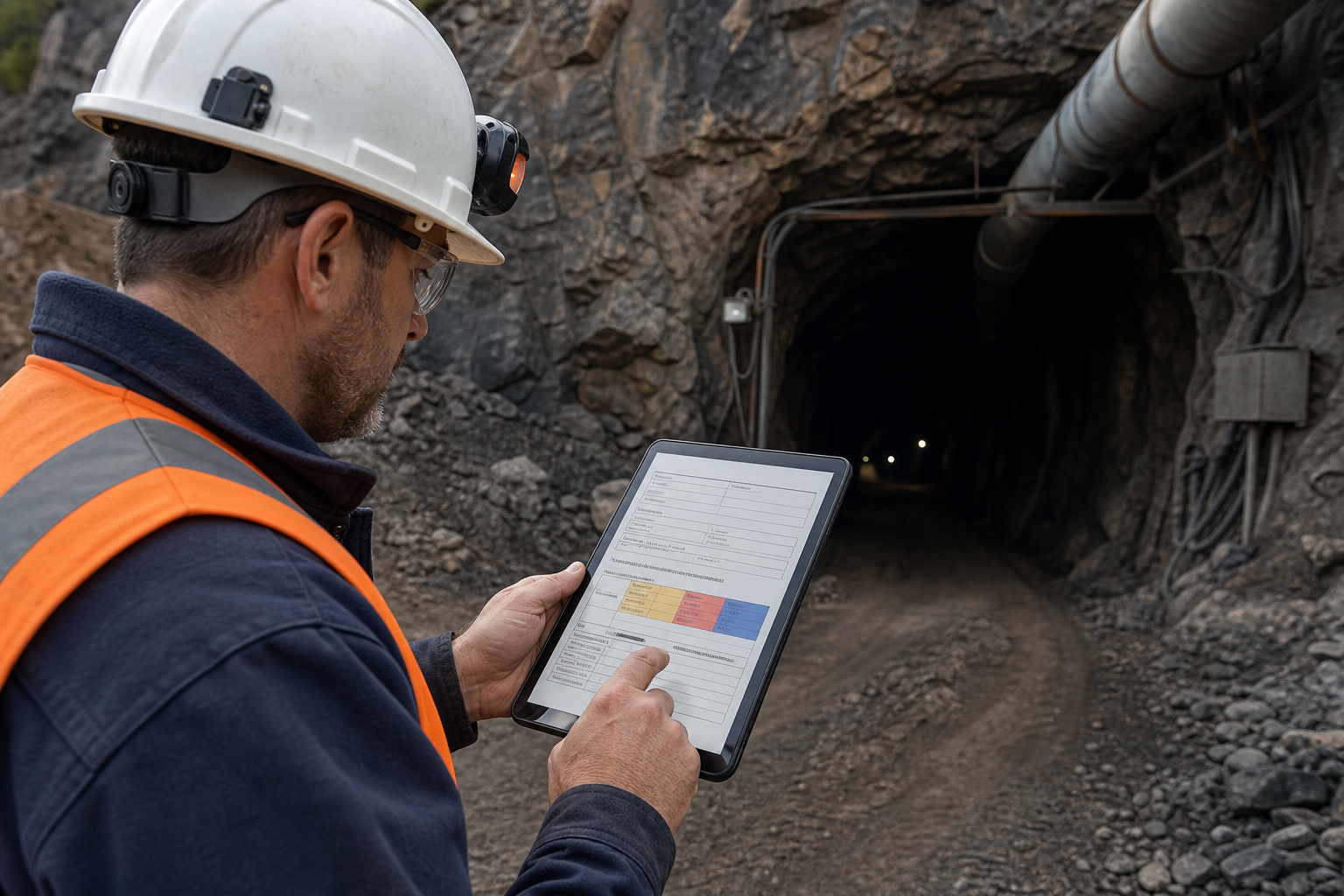

A hydraulic HVAC system that fails mid-shift on a haul truck isn’t just a comfort issue. It’s a health risk, a compliance violation, and a production loss all at once. This guide walks maintenance managers and fleet technicians through a systematic diagnostic process, from baseline pressure verification to control module fault isolation, with specific attention to the failure modes that mining environments create.
Step 1: Understand How Hydraulic-Driven HVAC Systems Work on Mining Trucks
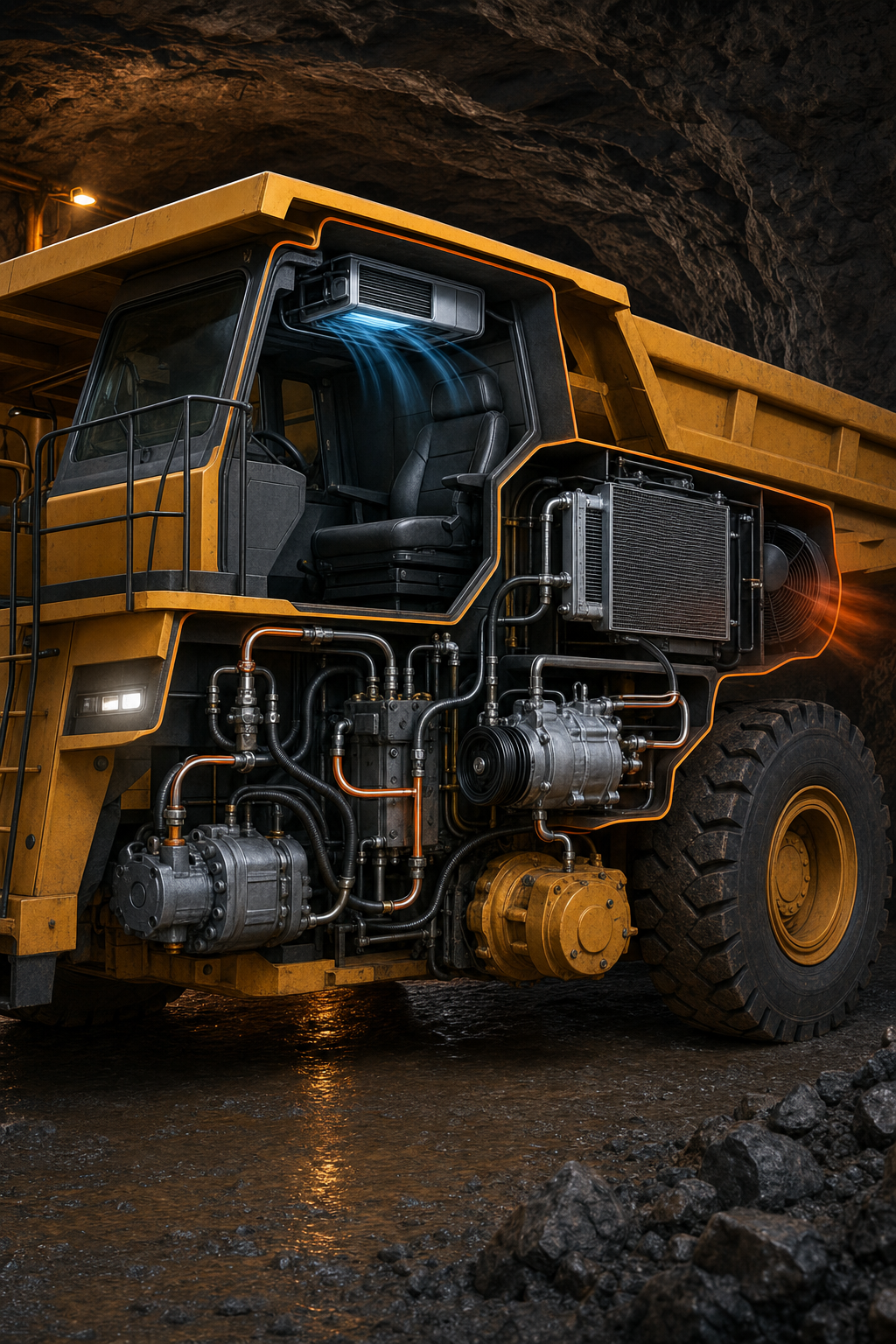
Before you start pulling hoses or reading pressure gauges, you need a clear picture of how the system moves energy. A hydraulic HVAC system on a mining truck doesn’t use a belt-driven compressor connected to the engine. Instead, the truck’s existing hydraulic circuit drives a hydraulic motor, and that motor spins the AC compressor. The refrigerant circuit then functions like a conventional system, but the power source is hydraulic oil under pressure, not a crankshaft.
The main components you’re working with are the hydraulic pump (usually gear-type or piston-type), the directional control valve, the hydraulic motor mounted to the compressor, the heat exchanger or oil cooler, and the refrigerant-side components: compressor, condenser, receiver-drier, expansion valve, and evaporator. On most heavy haul trucks, the hydraulic circuit is also shared with other auxiliary systems, which matters when you’re tracing faults.
Operator enclosures on mining machinery must maintain controlled temperature, humidity, and air quality levels during continuous operation. That means your HVAC system isn’t just comfort equipment. It’s a regulated safety system. Any fault that compromises cooling or pressurization is a compliance event, not just a maintenance item.
On underground equipment especially, hydraulic-driven AC is common because it eliminates the fire risk of refrigerant-cycle compressors driven by exposed belt drives, and it decouples HVAC performance from engine RPM. If the hydraulic system is running, the HVAC can run. For more on how hydraulic mobile air conditioning systems are configured for heavy equipment, that context helps you read schematics correctly before touching anything.
By the end of this step, you should have the OEM hydraulic schematic and the HVAC system layout in hand, know which hydraulic circuit feeds the HVAC motor, and understand whether your system runs on an open-center or closed-center (load-sensing) hydraulic circuit. That distinction changes how you interpret pressure readings entirely.
Step 2: Conduct a Pre-Diagnostic Safety and System Pressure Check
Never start a hydraulic diagnosis without depressurizing the system first. Hydraulic circuits on large mining trucks can hold significant pressure. A fitting loosened under pressure doesn’t drip. It injects fluid through skin, and hydraulic injection injuries require immediate surgical intervention.
Follow your site’s lockout/tagout procedure. Then bleed pressure from the hydraulic circuit at the designated test port before attaching any gauge set. Once the system is safe, you can begin your baseline readings.
Pressure Baseline Procedure
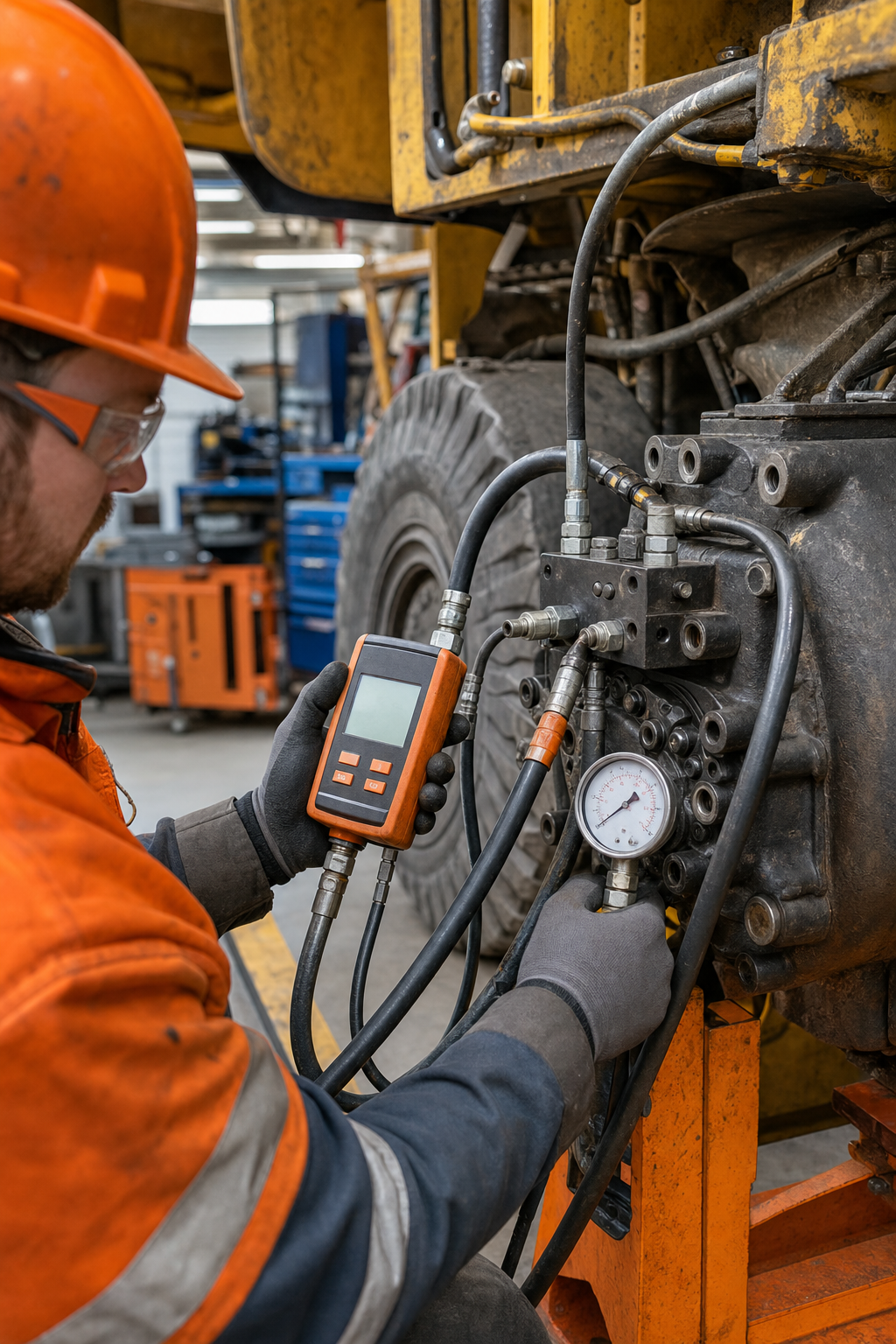
Connect a calibrated pressure gauge to the HVAC hydraulic circuit test port, typically located upstream of the hydraulic motor. Start the engine and bring it to the manufacturer’s specified idle RPM. Record the static pressure with the HVAC switched off, then record operating pressure with the HVAC switched on at full fan speed. Compare both readings to the OEM spec sheet for your unit.
For reference, Polar Mobility Research Ltd. hydraulic AC units are available in open-center gear pump or closed-center pressure-compensated load-sense configurations. Each has a different expected pressure profile, so pulling the wrong spec will send you down the wrong diagnostic path immediately.
Also check hydraulic oil level and condition at this stage. Oil that’s been contaminated with water or run beyond its service interval degrades viscosity. Thin oil means reduced flow rate, which directly reduces motor speed and compressor output even when system pressure reads normal. Check oil colour: clean hydraulic oil is clear amber. Milky or dark brown oil is condemned fluid and a fault source in itself.
MSHA-rated cab environments require documentation of any system fault and corrective action. Log your baseline readings with date, truck ID, engine hours, and ambient temperature. That record becomes your comparison point at the next service interval and your compliance evidence if an inspection occurs.
By now you should have: a confirmed safe working state, a baseline pressure reading at idle and at operating load, and a hydraulic oil condition assessment. If pressure is within spec and oil is clean, the fault is most likely on the refrigerant side or in the control system. If pressure is low, you stay on the hydraulic side.
Step 3: Diagnose Insufficient Cooling or Heating Output
Insufficient cooling is the most common complaint on hydraulic HVAC systems in mining. The failure modes, though, split into two groups that feel identical to the operator: low refrigerant-side capacity or low hydraulic-side drive energy. You need to separate them before you order parts.
Refrigerant-Side Checks
Attach a manifold gauge set to the high and low refrigerant ports. With the system running at operating temperature (give it 10 minutes), compare your suction and discharge pressures to the refrigerant’s pressure-temperature chart for your ambient conditions. Low suction pressure with a frost-covered evaporator inlet points to a restriction. Low suction and low discharge together suggests a refrigerant charge loss. High suction and high discharge suggests a condenser airflow problem or an overcharge.
On mining trucks, condenser fouling is extremely common. The condenser sits in the path of dust, ore fines, and engine exhaust. A condenser core that’s 30% blocked will significantly reduce heat rejection capacity even with a full refrigerant charge. Inspect the condenser core with compressed air first. If the core is mechanically damaged and bent fins can’t be straightened, the core needs replacing, not just cleaning.
For heating output issues on units with hydronic or fuel-fired heating integrated into the HVAC assembly, check the fuel-fired heater’s built-in self-diagnostic codes before going further. Many heavy-duty fuel-fired heaters used in mobile equipment store fault codes that point directly to ignition failures, fuel delivery problems, or overheat shutdowns, which saves significant diagnostic time.
Hydraulic-Side Cooling Capacity Loss
If refrigerant pressures are correct but cab temperature won’t drop, measure the hydraulic motor shaft speed directly with a tachometer or calculate it from known flow rate and motor displacement. A motor running below its rated RPM will spin the compressor below its designed operating speed, reducing refrigerant mass flow and cutting cooling capacity. The cause is almost always insufficient hydraulic flow to the motor.
Flow loss to the HVAC motor can come from a priority valve set incorrectly, a flow control valve that’s stuck or worn, or demand from another auxiliary circuit stealing flow. Check whether the fault appears only when another hydraulic function is active (like a dump body raise). If so, you have a circuit priority problem, not an HVAC component failure. Units such as the modular 22,000 BTU horizontal hydraulic-drive air conditioner are available in both open-center gear pump and closed-center pressure-compensated load-sense variants specifically to match the truck’s existing circuit architecture and priority valve configuration.
Step 4: Isolate Hydraulic Flow and Motor Faults Affecting HVAC Performance
If Step 3 points you toward the hydraulic side, this is where the real fault isolation happens. You’re looking at the pump, the control valves, the hydraulic motor itself, and the plumbing between them.
Pump Output Testing
Install an inline flow meter at the pump outlet. With all auxiliary circuits isolated (use the relevant shut-off valves), run the engine to operating RPM and measure actual pump output flow in litres per minute. Compare this to the pump’s rated output at that RPM from the spec sheet. A pump delivering less than 90% of rated flow at correct RPM is worn and should be replaced rather than adjusted. Pumps don’t recover from internal wear through calibration.
On gear pumps, internal leakage increases as the pump wears, and that leakage bypasses the output circuit entirely. On piston pumps (more common on load-sensing circuits), check the swashplate angle control. A stuck or sluggish displacement control won’t respond to load-sensing signals and will deliver either full flow or near-zero flow, neither of which is correct for the HVAC motor’s needs.
Control Valve and Motor Faults
Check the directional control valve that routes flow to the HVAC motor. With the system in the ON position, verify that full pilot signal is reaching the valve’s actuator. A valve that’s partially shifting will throttle flow to the motor even if the pump is outputting correctly. Many directional valves on mining trucks use solenoid actuation. Test solenoid resistance against spec. An out-of-spec solenoid coil may shift the valve partially but not fully.
The hydraulic motor itself can fail through internal seal wear or bearing damage. Signs include shaft wobble, abnormal noise at the motor, or a motor case drain flow rate that’s significantly above spec (indicating internal leakage past seals). Case drain line flow is easy to measure: disconnect the case drain line, capture flow into a container for 60 seconds, and measure volume. High case drain flow with low shaft speed confirms motor wear.
Polar Mobility Research Ltd. designs its hydraulic AC units for access to these test points without full disassembly, which matters on a working mine site where downtime directly costs production. Their hydraulic-driven air conditioner units use a configurable pump style (open-center gear or closed-center load-sense) so maintenance teams can match the unit to the truck’s existing circuit without replumbing the entire auxiliary system.
Step 5: Inspect Filtration Systems and Air Quality Components
In a mining environment, filtration failure is often the root cause that nobody traced back far enough. Dust ingress degrades the evaporator, fouls the condenser, contaminates hydraulic oil, and reduces cab air quality simultaneously. A thorough filtration inspection covers both the hydraulic circuit and the cabin air circuit.
Hydraulic Filtration
Check the hydraulic return filter’s differential pressure indicator. Most systems have a bypass indicator that pops when the filter is loaded. If the indicator has tripped, the filter has been bypassing for some period, and contaminated oil has been reaching the motor, pump, and control valves. Replace the filter element immediately and pull an oil sample for particle count analysis. Send the sample to a lab for cleanliness classification. If the particle count is above the system’s target cleanliness level, flush the circuit before returning it to service.
Also check the hydraulic case drain filter if the system has one. This filter protects the tank from motor and pump case drain contamination. A neglected case drain filter is often how metal particles from a wearing motor end up spreading through the entire hydraulic circuit.
Cabin Air Filtration
Remove and inspect the primary cabin air filter. On a haul truck running in an open-cut mine, the filter can load to bypass within 200-400 hours depending on dust levels. A loaded filter doesn’t just reduce airflow. It drops cab pressurization, which allows unfiltered external air to infiltrate through door seals and penetrates the operator’s breathing zone.
Check the evaporator drain pan and drain line for blockages. A blocked drain line lets condensate pool in the evaporator housing, which becomes a medium for microbial growth and generates odour. It also adds moisture to the cabin air and reduces evaporator heat transfer capacity as water accumulates on the coil surface.
For detailed procedures on cabin air testing, including differential pressure measurement and PM2.5 readings, our guide on air quality testing for heavy mining equipment covers the step-by-step measurement process and how to compare readings against MSHA occupational exposure limits.
Positive pressurization is your first line of defence against dust infiltration. If a differential pressure meter shows the cab is at neutral or negative pressure relative to outside, your system has either a filtration restriction, a fan fault, or a sealing failure. Don’t return the truck to service until pressurization is restored.
Step 6: Identify Electrical and Control System Faults in Hydraulic HVAC Units
Hydraulic HVAC systems on modern mining trucks aren’t purely mechanical. They have electronic control modules, temperature sensors, pressure transducers, and fan motor controllers. An electrical fault can shut down the whole system or cause intermittent failures that look like refrigerant or hydraulic problems.
Common Electrical Fault Points
Start with the HVAC control module’s diagnostic output. Most units store fault codes. Connect the appropriate diagnostic tool (OEM-specific for Caterpillar or Komatsu platforms, or a generic J1939 CAN reader for systems with SAE J1939 integration) and read active and stored codes before clearing anything. A stored code for a high-pressure cutout, for example, tells you the system shut down on a real refrigerant pressure event, not an electrical glitch.
The table below outlines the most common electrical fault categories, their typical symptoms, and the first test to run:
Wiring use condition is a major issue on mining trucks. The combination of vibration, temperature cycling from cold start to full operating heat, and physical abrasion from ore dust means that connectors corrode and wire insulation cracks faster than on on-highway equipment. Inspect every connector in the HVAC circuit for corrosion, backed-out pins, and chafed insulation. A multimeter won’t always catch an intermittent open circuit. A wiring use with cracked insulation may pass a continuity test cold and fail under vibration at operating temperature.
At Polar Mobility Research Ltd., we build our hydraulic HVAC systems with mining-specific wiring standards in mind. That includes sealed connectors rated for the vibration and temperature exposure levels that open-cut and underground operations actually produce. If you’re retrofitting a system onto an older truck platform, matching the connector and use spec to the truck’s operating environment is as important as matching the BTU rating.
Also verify the supply voltage to the control module under load. Many mining trucks run 24VDC systems. A module rated for 24VDC that’s receiving 20VDC due to a weak battery, a corroded ground strap, or excessive voltage drop in the supply line will behave erratically. Measure voltage at the module’s power input terminals with the system running, not at the battery post.
FAQ
How do I know if the hydraulic motor or the AC compressor is the problem on my mining truck?
Measure the hydraulic motor’s shaft speed directly with a tachometer while the system is running. If shaft speed is within spec but cab cooling is poor, the compressor or refrigerant circuit is the fault. If shaft speed is below spec, the hydraulic motor or its supply circuit is the problem. Never assume the compressor is failed without confirming that the motor is spinning it at the correct RPM first.
What hydraulic oil specification should I use in a mining truck HVAC circuit?
Follow the OEM specification for your specific truck model and hydraulic motor type. Most heavy mining equipment uses an anti-wear hydraulic oil in the ISO VG 46 or ISO VG 68 viscosity range. Operating in extreme cold may require a multi-viscosity or arctic-grade fluid. Using the wrong viscosity degrades both pump efficiency and motor response time, so always confirm the spec from the truck manufacturer’s service manual rather than substituting from general inventory.
What does ISO 23875 require for HVAC systems on mining trucks?
ISO 23875 sets minimum requirements for operator enclosure environments on mining machinery, including temperature range, air change rate, filtration efficiency, and pressurization. It requires that the cab maintain a positive pressure differential relative to the external environment to prevent dust ingress. Systems must be designed for the specific thermal and dust load of the operating environment. Non-compliant systems are a regulatory liability in most mining jurisdictions.
How often should hydraulic HVAC filters be changed on a haul truck?
Hydraulic return filters on mining trucks typically need replacement every 500-1,000 engine hours, but that interval shortens significantly if oil samples show high particle counts or if the bypass indicator trips early. Cabin air filters in open-cut mines can require replacement every 200-400 hours depending on dust loading. Track both by hours and by differential pressure indicator, and never extend the interval past the first bypass indicator trip.
Can I diagnose a hydraulic HVAC fault without OEM diagnostic software?
Yes, for most hydraulic and refrigerant-side faults. A calibrated pressure gauge set, an inline flow meter, a digital multimeter, and a tachometer cover the majority of diagnostic steps. For reading stored fault codes from the HVAC control module, you’ll need either an OEM diagnostic tool or a J1939-compatible CAN reader if the system uses SAE J1939. Mechanical and fluid diagnostics don’t require software, but control module codes speed up electrical fault isolation considerably.
What are the most common HVAC failure modes unique to underground mining trucks?
Underground mining trucks face accelerated condenser and evaporator fouling from fine rock dust and diesel particulate matter. Hydraulic oil contamination is higher because airborne particles infiltrate through any unsealed service access points. High ambient humidity in some underground operations accelerates electrical connector corrosion. MSHA requires documented corrective action for any system that fails to maintain operator cab air quality, making rapid fault isolation especially important in underground operations.
Conclusion
Systematic fault isolation is the difference between a two-hour fix and a two-day chase. Start with the pressure baseline, separate hydraulic-side faults from refrigerant-side faults before touching components, and never skip the filtration inspection. If your site’s fleet needs hydraulic HVAC systems built for continuous-duty mining conditions with MSHA-rated components, Polar Mobility Research Ltd. builds both standard and custom units to match your specific truck platform and operating environment. Get in touch with the team to discuss your application.