
When hydraulic oil thickens at minus 40°C, equipment doesn’t just slow down, it stops. Heavy duty immersion fluid warmers solve that problem by keeping oils, fuels, and hydraulic fluids at the viscosity your systems need before the first cycle of the day. This guide covers how these units work, what compliance standards actually matter, and how to select the right configuration for Canadian mining and fleet operations.
How Heavy Duty Immersion Fluid Warmers Work in Industrial Systems
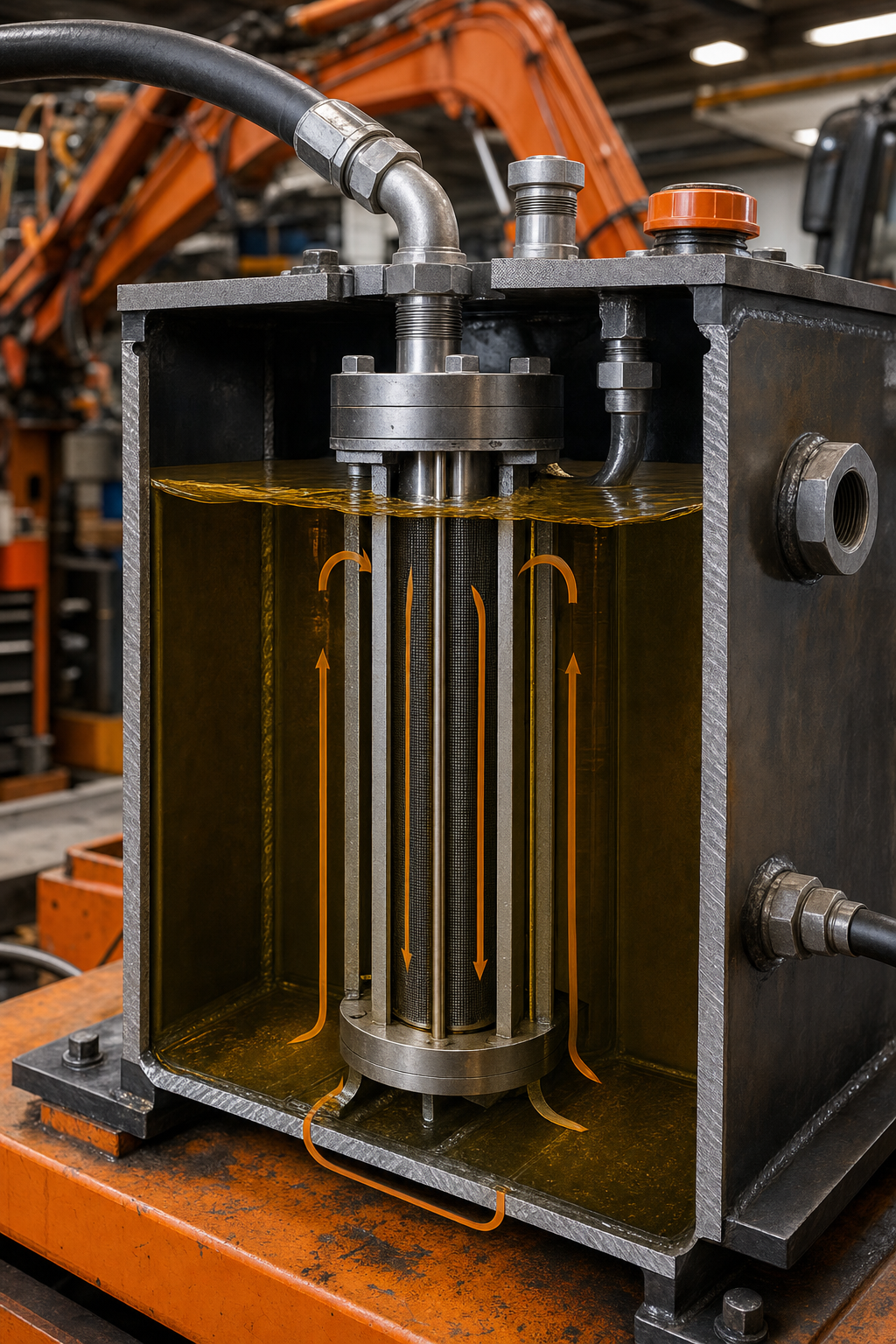
An immersion fluid warmer transfers heat from one fluid to another inside a sealed exchanger body, with no direct contact between the two circuits. Engine coolant or hydraulic fluid carrying thermal energy from the running engine passes through one side of the warmer. On the other side, cold hydraulic oil, fuel, or another process fluid absorbs that heat. The two fluids never mix.
This indirect heat transfer method is what makes these units suited for mobile heavy equipment. There’s no open flame, no electrical resistance element submerged in potentially flammable oil, and no external combustion. The heat source is already on the machine.
Most industrial immersion warmers mount through the tank wall using a threaded port, typically a 2-inch NPT connection, or bolt via a weld flange. Once installed, they can be oriented horizontally or vertically depending on tank geometry. That flexibility matters on compact mobile equipment where reservoir access is constrained. The Polar Mobility immersion heater catalog covers units built with stainless steel, aluminum, and mild steel bodies, each selected based on fluid compatibility and operating pressure.
The core performance metric is heat transfer rate, measured in BTU/h or kW. For a loaded hydraulic excavator in a Canadian winter, you need enough warming capacity to bring a full reservoir from ambient soak temperature to operational viscosity before the first high-pressure demand cycle. Under-sizing that capacity means extended idle warm-up, which burns fuel and adds hours to the drivetrain without productive work.
One design detail worth understanding is internal flow resistance. Warmers paired with fuel-fired engine coolant heaters need low glycol-side resistance so the coolant pump can circulate heat without pressure drop penalties. Units designed for this application specify their internal restriction in PSI at a given flow rate, and that number should be confirmed before installation.
Immersion warmers are also called bayonet heaters, hydraulic tank heaters, and fuel-fluid heat exchangers depending on the application context. The terminology varies by industry, but the operating principle is the same: recover and redirect heat that’s already being generated by the machine rather than producing it independently. According to the Wikipedia overview of heat exchangers, shell-and-tube and bayonet configurations are among the most common industrial designs precisely because they scale well from small mobile reservoirs to large stationary tanks.
Critical Compliance Standards: MSHA Ratings and ISO 23875 Requirements
Compliance is not a checkbox. In underground mining, a non-compliant heating system can trigger a shutdown order, void your equipment certification, or contribute to an incident investigation. Two standards govern most of the equipment space in Canadian and North American hard-rock and surface mining: MSHA approval ratings and ISO 23875.
MSHA Approval Ratings
The U.S. Mine Safety and Health Administration tests and approves equipment for use in gassy and dusty mine environments where ignition sources must be controlled. MSHA approval is enforced under 30 CFR mining regulations and is accepted by most Canadian provincial mining regulators as an equivalent standard, particularly in Ontario and British Columbia operations. For any heating component installed on underground mining equipment, the MSHA approval number must be traceable back to the specific assembly as installed, not just the base component.
For immersion warmers specifically, MSHA relevance centers on two concerns. First, the system must not present an ignition risk if a hydraulic line fails and oil contacts a hot surface. Second, any electrical components in the circuit must meet the spark-prevention and enclosure ratings specified for the mine classification. Hydraulic-driven warmers with no on-board electrical heating elements have a simpler compliance path here, which is one operational reason they dominate underground applications.
ISO 23875 Requirements
ISO 23875 is the international standard covering air quality and thermal environment requirements in the operator cabs of mining vehicles. While its primary focus is cab climate and filtration, the standard’s broader framework for thermal management of mining mobile equipment creates a defined engineering context for all HVAC and fluid conditioning systems on a vehicle. When cab heating systems draw heat from the same engine coolant loop as the fluid warmer, the two systems are thermally coupled. An ISO 23875-compliant cab heating design must account for that shared load.
For procurement officers and OHS managers, the usable implication is that selecting a fluid warmer isn’t independent of the cab climate system spec. If both systems share the coolant circuit, you need to confirm that peak simultaneous demand, such as a cold morning start with cab heat running and hydraulic oil at ambient temperature, stays within the engine’s coolant heat rejection capacity.
Additional Canadian Standards Context
In Canada, Transport Canada and provincial OHS regulations add requirements for mobile equipment operating on public roads or in regulated worksites. Fluid warmers on highway-rated fleet vehicles need to be installed in ways that don’t compromise frame integrity or fuel system safety. Provincial mining acts in Alberta and Ontario specify equipment approval processes that reference both MSHA and CSA standards. Building a compliance file before installation, not after, is the approach that avoids costly retrofits.
Hydraulic-Driven Fluid Warming Systems vs. Electrically Powered Units
The choice between hydraulic-driven and electrically powered fluid warming comes down to where the machine operates, what power is available, and what the compliance environment requires. Both approaches have their place, but they serve different operational profiles.
Hydraulic-Driven Systems
Hydraulic-driven warmers use the machine’s own hydraulic circuit or engine coolant circuit as the heat source. No shore power, no generator, no external electrical supply. The warmer runs as long as the engine runs, which is exactly when you need it. On a haul truck doing a remote mine site run, or an excavator working a bush clearing contract three hours from the nearest service point, that self-sufficiency is the deciding factor.
These systems also have the simpler MSHA compliance path mentioned above. Without an electrical resistance element, there’s no need to certify a heating element for gassy atmosphere use. The system is hydraulically inert when the engine is off, which reduces ignition risk during maintenance.
The limitation is heat source dependency. If the engine hasn’t run long enough to bring coolant up to operating temperature, the warmer can’t deliver much heat. On an overnight cold soak at minus 35°C, a hydraulic-driven warmer alone won’t pre-condition the machine before the operator arrives. That’s where a fuel-fired pre-heater in the circuit handles the initial warm-up load, with the fluid warmer taking over once the engine is running.
Electrically Powered Units
Electric immersion heaters draw from shore power or an onboard generator. They can pre-heat a reservoir before engine start, which gives them an advantage for fleet vehicles plugged in at a depot overnight. For highway trucks parked at a terminal, electric pre-heating is standard practice. The unit heats the hydraulic oil, the engine oil, and the coolant while the truck is connected to the building electrical supply.
The tradeoff is infrastructure dependency. Remote worksites often can’t supply adequate shore power for a full fleet of heavy equipment. And electrically powered units require careful attention to element watt density and fluid compatibility to avoid coking hydraulic oil against a high-temperature element surface.
| Factor | Hydraulic-Driven Warmer | Electrically Powered Unit |
|---|---|---|
| Power source | Engine coolant or hydraulic circuit | Shore power or onboard generator |
| Pre-start warming | Requires fuel-fired pre-heater assist | Yes, if connected to power |
| Remote site suitability | High, self-contained | Low without power infrastructure |
| MSHA compliance path | Simpler, no electrical element in fluid | Requires element certification for gassy environments |
| Maintenance complexity | Lower, no electrical components in tank | Higher, element fouling and burnout risk |
| Best application | Underground mining, remote surface sites | Depot-based fleet trucks, terminal operations |
Many operations run both. The fuel and fluid heat exchangers from Polar Mobility Research Ltd. are designed to integrate with fuel-fired pre-heaters, so the two systems work as a sequence rather than competing approaches.
Extreme Environment Performance: Cold-Weather Operation in Canadian Mining and Fleet Applications
Canadian mining operations push equipment to conditions that most industrial machinery was never designed to handle without modification. Temperatures in northern Ontario, the Northwest Territories, and northern British Columbia routinely reach minus 40°C or colder during winter operational windows. At those temperatures, ISO VG 46 hydraulic oil can reach a viscosity that exceeds pump inlet specifications, causing cavitation on startup. A blown seal from cold-start cavitation on a haul truck hydraulic circuit is a multi-hour repair on a good day, and a multi-day parts wait if you’re remote.
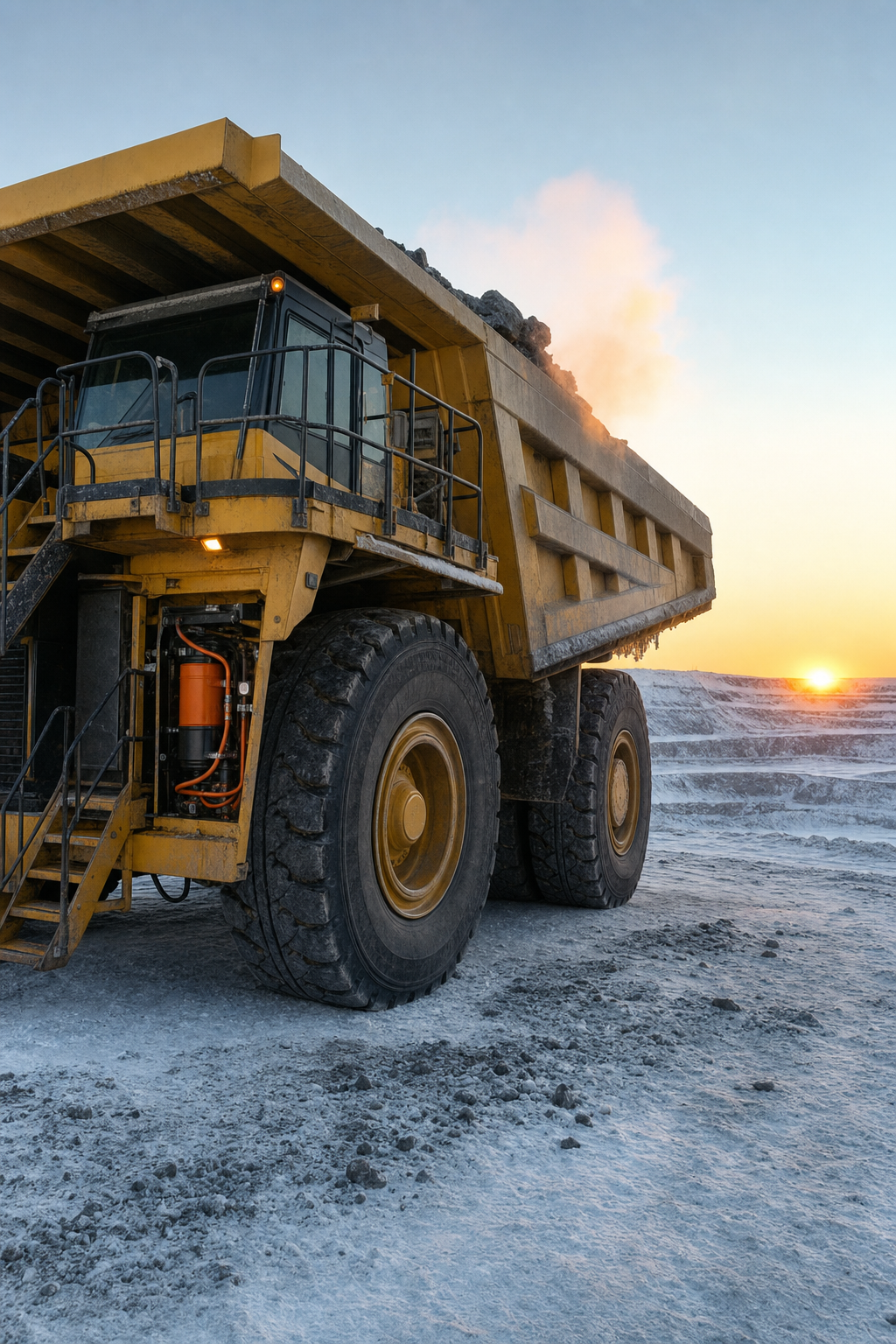
The operational case for heavy duty immersion fluid warmers in this context is direct. By maintaining hydraulic oil above the pump’s minimum inlet viscosity requirement before the first high-pressure demand, warmers prevent the mechanical damage that cold starts cause. According to engineering data from Wikipedia’s entry on hydraulic fluids, viscosity index and pour point are the two most critical low-temperature parameters for hydraulic system design, and both worsen nonlinearly as temperatures drop below minus 20°C.
Fleet maintenance managers running mixed fleets of highway trucks and off-road equipment face a specific challenge: the two equipment types have different overnight parking arrangements and different power availability. Highway trucks at a depot can use electric pre-heating. Remote excavators and drill rigs on a mine site cannot. A fluid warming system that works on both asset types without requiring different infrastructure for each one reduces the management burden considerably.
There’s also a productivity argument. The data on how fluid warmers affect cold-weather productivity points to two measurable outcomes: reduced start-up idle time and fewer hydraulic system failures during the first hour of operation. Both translate directly to machine availability, which is the metric that drives unit cost per tonne in mining.
For fleet operations, the argument extends to fuel. Every minute a diesel engine idles to warm hydraulic oil it’s burning fuel without moving material. A warmer that pre-conditions the fluid independently allows the operator to put the machine to work faster. On a 12-hour shift running 20 machines, that difference compounds.
Northern fleet operators also deal with diesel fuel gelling, a separate but related problem. Fuel warmers installed in the fuel tank or fuel line keep diesel above its cloud point and pour point. The same heat exchange principles apply. Polar Mobility Research Ltd. builds systems that address both the hydraulic oil and the fuel side, which matters on machines where both problems occur simultaneously.
Key Specifications to Evaluate When Selecting a Heavy Duty Immersion Fluid Warmer
Selecting the wrong warmer doesn’t usually result in obvious immediate failure. It results in a system that technically works but underperforms during the conditions that matter most. These are the specifications that separate adequate from well-matched.
Heat Transfer Capacity
Rated in BTU/h or kW, this must match the thermal demand of the reservoir volume and the ambient temperature range. A warmer rated for a 50-litre tank won’t adequately condition a 200-litre hydraulic reservoir in a two-hour pre-shift window. Calculate the energy needed to raise the fluid from minimum ambient to minimum operating temperature, then add a margin for heat loss through the tank walls.
Operating Pressure Rating
Industrial immersion warmers used in hydraulic circuits must be pressure-tested beyond working pressure. Units tested to 300 PSI with a recommended working pressure of 150 PSI provide a reasonable safety margin for most mobile equipment circuits. Know the relief valve setting on your hydraulic system and confirm the warmer’s rated pressure is above it.
Connection Type and Tank Compatibility
NPT threaded connections are the most common on North American equipment. A 2-inch male NPT thread fits standard tank bosses on most hydraulic reservoirs. But some OEM tanks use metric fittings or require a weld flange. Confirm tank wall thickness and material before ordering, since aluminum tanks have different weld flange requirements than mild steel.
Material Selection
Stainless steel suits applications with corrosive fluids or high moisture exposure. Aluminum is lighter and works well with clean hydraulic oil in enclosed reservoirs. Mild steel is the standard choice for strong, cost-effective installations in straightforward fluid types. Each material also has different thermal conductivity characteristics, which can affect performance at the margin.
Glycol Flow Resistance
If the warmer connects to a fuel-fired engine coolant heater circuit, internal glycol-side resistance determines whether the coolant pump can maintain adequate flow. Low resistance warmers maintain circulation even when the coolant pump is running at low speed during initial warm-up. A high-resistance unit can starve the circuit and reduce heating performance.
Mounting Orientation
Confirm that the warmer can be mounted in the orientation your tank allows. Horizontal installation works for most over-the-side and through-wall applications. Some tank designs require vertical mounting with the fittings at the top to prevent air pockets in the exchanger body. An air-locked exchanger transfers heat poorly.
Integration with Mobile Heating and Filtration Systems: The Polar Mobility Research Ltd. Approach
A fluid warmer in isolation solves one problem. But on a piece of heavy mining or construction equipment, thermal management is a system problem. The cab needs heat. The hydraulic oil needs conditioning. The fuel needs to stay above its gel point. The engine needs pre-heating. And in underground applications, the air entering the cab needs filtration. These aren’t independent requirements.
Polar Mobility Research Ltd. designs systems where these functions are integrated rather than bolted on separately by different suppliers. Our Polar Mobility immersion heaters are built to pair directly with fuel-fired pre-heaters, so a single coolant loop can serve the engine block, the cab heat exchanger, and the hydraulic fluid warmer in sequence. That architecture means fewer pumps, fewer circuits to maintain, and fewer failure points.
The physical construction reflects the field conditions these systems operate in. Stainless steel, aluminum, and mild steel bodies are available depending on application requirements. Every unit is tested to 300 PSI. The 2-inch NPT thread and optional tank weld flanges cover the range of tank designs found on mining, forestry, and fleet equipment across Canada. When a standard configuration doesn’t fit a specific OEM tank design, we build to fit. That’s the “if it doesn’t exist, we’ll build it” commitment that drives our custom build program.
Integration with filtration is the other dimension. In underground mining, cab air quality is an OHS obligation, not just a comfort consideration. ISO 23875 sets the framework, and meeting it requires a filtration system that’s designed for the vehicle, not adapted from a different application. Polar Mobility Research Ltd. engineers cab air pre-cleaners and filtration systems alongside heating units, so the thermal and air quality loads on the HVAC system are calculated together.
For fleet maintenance managers, the value of a single-source integrated system is maintenance clarity. When a system issue arises, there’s no ambiguity about which component belongs to which supplier or whose spec the installation should follow. The documentation, the parts, and the support come from one source. That matters at 3 a.m. during a Canadian winter when a machine is down and a shift is waiting.
We serve operations across mining, oil and gas extraction, forestry, construction, and fleet transport. The industries vary, but the physics of cold-weather fluid management don’t. Hydraulic oil at minus 40°C behaves the same whether it’s in an underground drill rig or a highway tanker truck. The solution is the same too: keep the fluid warm, keep the system moving, keep the machine working.
FAQ
What is a heavy duty immersion fluid warmer and how does it differ from a standard immersion heater?
A heavy duty immersion fluid warmer is an industrial heat exchanger that transfers thermal energy from one fluid circuit to another without the two fluids mixing, typically using engine coolant to heat hydraulic oil or fuel. Standard consumer immersion heaters use an electrical resistance element submerged directly in the fluid. Heavy duty units for industrial equipment are pressure-rated, corrosion-resistant, and designed for continuous mobile operation in extreme temperatures rather than static applications.
What operating pressure should I specify for a mining hydraulic circuit?
For most mobile mining equipment, specify a warmer tested to at least 300 PSI with a recommended working pressure of 150 PSI or higher. Always confirm the setting on your circuit’s pressure relief valve and ensure the warmer’s rated working pressure exceeds it. Undersized pressure ratings are a common source of seal failure during high-demand cold starts when system pressures spike.
Does an immersion fluid warmer need to meet MSHA approval for underground use?
Any heating component on underground mining equipment operating in a classified gassy or dusty environment must meet MSHA requirements. Hydraulic-driven immersion warmers with no electrical resistance element in the fluid circuit have a simpler compliance path than electric units. However, the full installation, including any electrical controls or thermostats in the circuit, must be evaluated against the mine classification. Always confirm with your provincial mining regulator and MSHA documentation before installation.
Can one fluid warmer handle both hydraulic oil and diesel fuel warming on the same machine?
Typically, separate warmers are used for hydraulic oil and diesel fuel because the circuits have different temperature targets, flow rates, and contamination risks. Mixing the two circuits introduces fuel contamination risk into the hydraulic system if a seal fails. Some integrated systems use a shared coolant supply loop with separate exchangers for each fluid, which is the approach Polar Mobility Research Ltd. uses in its multi-function mobile heating configurations.
How does ISO 23875 affect fluid warmer selection for mining vehicles?
ISO 23875 primarily governs cab air quality and thermal environment on mining mobile equipment. Its relevance to fluid warmers is indirect but real: when the cab heating system and the fluid warmer share an engine coolant loop, the combined thermal demand must stay within the engine’s heat rejection capacity. A system designed without accounting for that shared load may underperform the cab climate requirements during cold starts when both demands are highest simultaneously.
What maintenance does an immersion fluid warmer require in a heavy fleet application?
Maintenance requirements are low compared to electric heaters, but not zero. Check the NPT or flange connections for seepage at each scheduled service interval. Inspect the exchanger body for external corrosion, particularly on equipment operating in road-salt environments. Confirm glycol concentration in the coolant circuit annually, since degraded glycol accelerates internal corrosion of the exchanger. Most hydraulic-driven warmers have no serviceable internal components and are replaced as a unit at end of service life.
Conclusion
For operations running heavy equipment through Canadian winters, the question isn’t whether you need fluid warming, it’s whether your current system is sized, compliant, and integrated correctly. Start with the pressure rating and heat transfer capacity for your specific reservoir volume and ambient range, confirm MSHA documentation is traceable for the full installation, and evaluate whether a hydraulic-driven or electrically powered configuration better suits your site infrastructure. Polar Mobility Research Ltd. engineers both standard and custom fluid warming solutions for mining, fleet, and industrial applications. Contact us for a system specification review before your next procurement cycle.