
If your mobile HVAC equipment isn’t rated for mining environments, you’re not just risking a failed inspection. You’re putting operators in real danger. MSHA compliance for mobile HVAC is more specific than most fleet managers expect, and the gap between a standard commercial unit and a genuinely MSHA-rated system is significant. Here’s what you need to know to stay compliant, troubleshoot failures fast, and select equipment that holds up underground.
Understanding MSHA Compliance for Mobile HVAC Equipment
MSHA compliance for mobile HVAC equipment falls under two separate regulatory frameworks, and confusing them is a costly mistake.Part 6covers product approval, meaning the equipment itself must be reviewed and approved by MSHA before it can be used in certain mining environments.Part 46addresses training and safety procedures for workers operating around mobile equipment, including visibility standards and site-specific protocols.
For HVAC units installed on mobile mining equipment, Part 6 approval is the critical gate. A unit without that approval documentation is not MSHA-rated, regardless of how it’s marketed. Procurement officers should request the MSHA product approval number and verify it before any purchase order is issued.
Part 46 also matters for HVAC technicians working on-site. Technicians must wear high-visibility reflective vests, keep clear of equipment blind spots, and follow site-specific emergency communication procedures. These aren’t suggestions. They’re requirements that apply every time someone opens a cab to service a heating or cooling unit on an active mine site.
One gap that most sources skip: the difference between equipment that is MSHA-approved at the component level versus a full system approval. A hydraulic-driven compressor might carry its own certification, but the assembled system on your haul truck needs to be evaluated as a whole. At Polar Mobility Research Ltd., we build systems with MSHA-rated components from the ground up, so the assembled unit meets the standard rather than relying on component-level paperwork alone.
ISO 23875 adds another layer. This international standard sets maximum CO₂ levels (ambient plus 400 ppm), minimum cabin pressurization (20 Pa sustained), and respirable particulate limits below 25 µg/m³. MSHA compliance and ISO 23875 overlap significantly for underground and surface mining cabs, and operations that meet both are in a much stronger position during audits.
Key Components of MSHA-Rated Mobile HVAC Systems
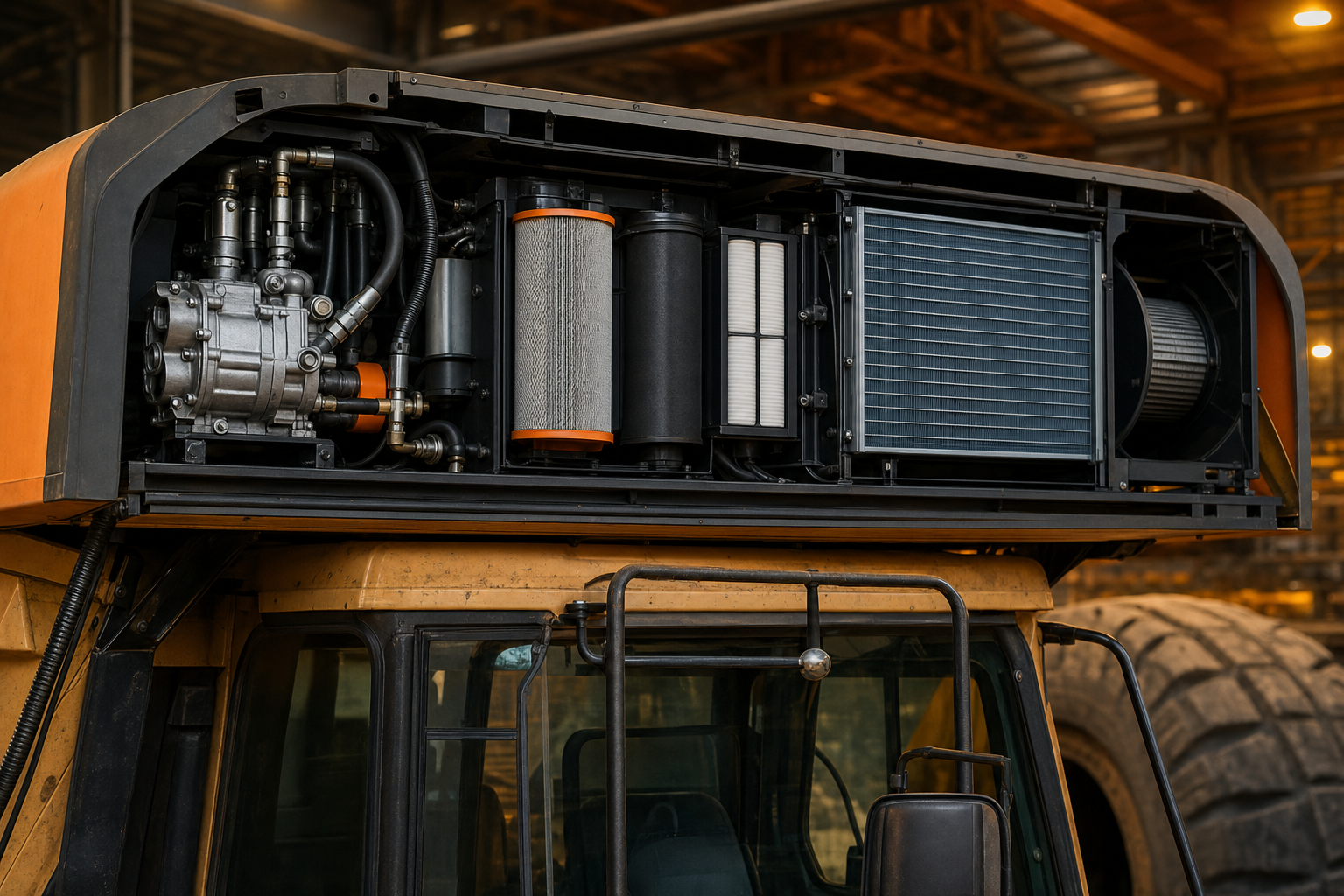
Understanding what’s inside a properly rated system helps fleet maintenance managers diagnose failures faster and spec replacements correctly. MSHA-rated mobile HVAC for heavy equipment is built around components that can handle vibration, dust, extreme temperatures, and the power constraints of hydraulic or high-voltage systems.
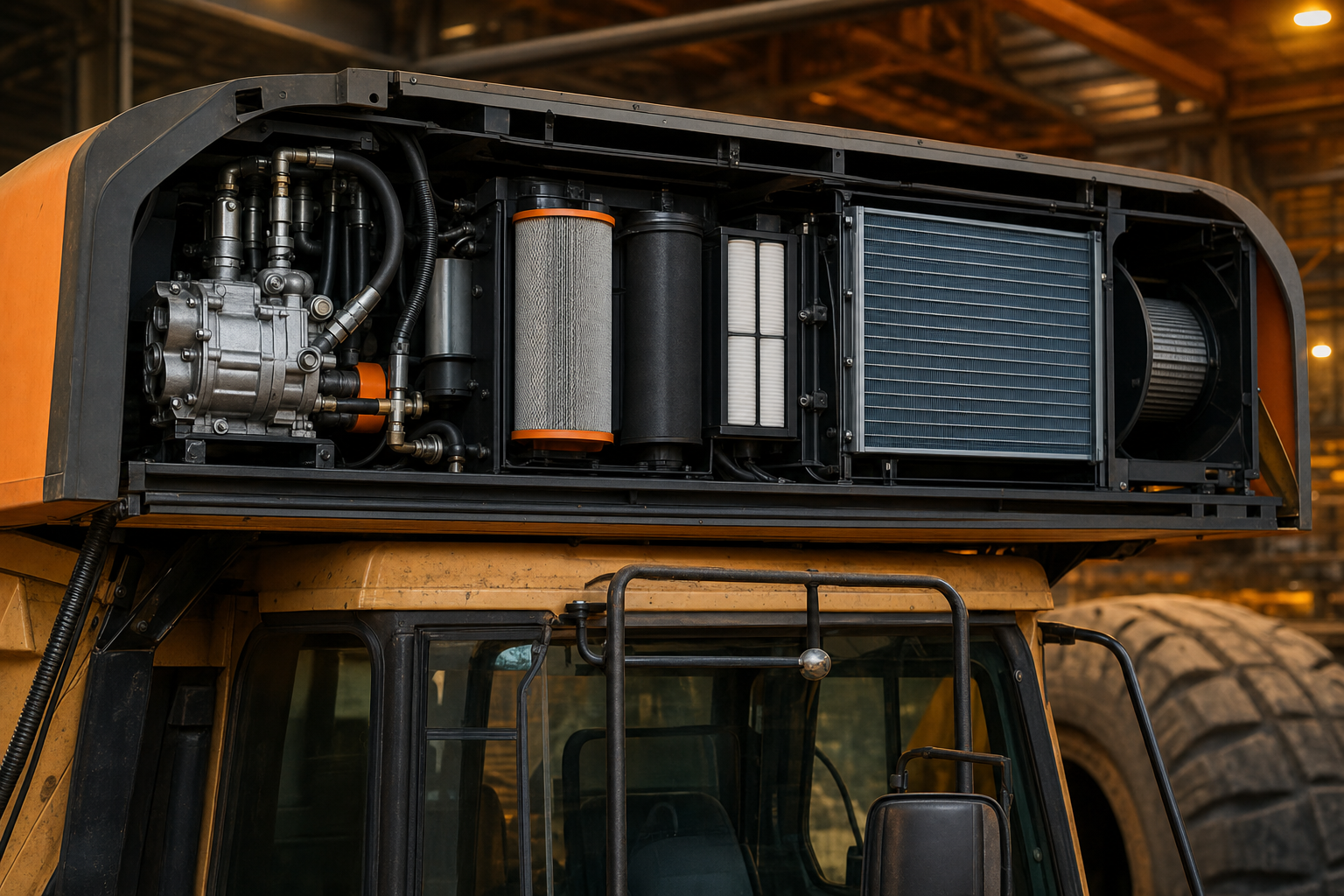
Here are the core components and what each one does in a mining-grade system:
- Hydraulic-driven compressor:Draws power from the machine’s hydraulic circuit rather than the electrical system. This eliminates ignition risk in hazardous atmospheres and keeps the HVAC running even when the engine is at low idle.
- Thermal switch (high-limit cutout):Shuts the heating circuit if temperatures exceed a safe threshold. On MSHA furnaces, this switch is in series with the thermostat circuit. A power interruption during operation can trip it, requiring a manual reset before the unit will call for heat again.
- Flame sensor / igniter:In fuel-fired heater systems, the flame sensor detects whether combustion has occurred after the gas valve opens. A contaminated sensor (white oxidation buildup on the rod tip) is one of the most common causes of no-heat lockout codes. It needs periodic cleaning with a fine wire brush.
- Draft inducer motor:Pulls combustion gases through the heat exchanger and out the flue. A failed inducer motor triggers a lockout before ignition even begins, because the pressure switch won’t close without adequate draft.
- Pressure switch:Confirms the inducer is moving air before allowing the ignition sequence to proceed. If the switch fails or the port gets blocked, the furnace locks out with no heat even though every other component is functional.
- Run capacitor:In the cooling side, the capacitor provides the start torque for the condenser fan motor. A weak or failed capacitor causes the fan to stall, which stops heat rejection and causes the system to blow warm air despite the compressor running.
- Multi-stage filtration:MSHA-rated systems for underground use typically combine a cyclonic pre-cleaner (cab air pre-cleaner) with a HEPA-grade media filter. ISO 23875 requires ISO 15 E or ISO 35 H HEPA filters to keep respirable particulate concentrations within safe limits inside the operator cab.
Polar Mobility Research Ltd. builds systems around hydraulic-driven compressors specifically because they remove the electrical ignition risk that disqualifies standard commercial units from MSHA-approved applications. If the application calls for high-voltage architecture instead, our high-voltage mobile HVAC systems are engineered to the same extreme-environment standards.
Step-by-Step Troubleshooting for Common Failures
Most no-heat and no-cool calls on MSHA-rated mobile HVAC systems trace back to a handful of components. Work through this sequence before ordering parts or pulling the unit.
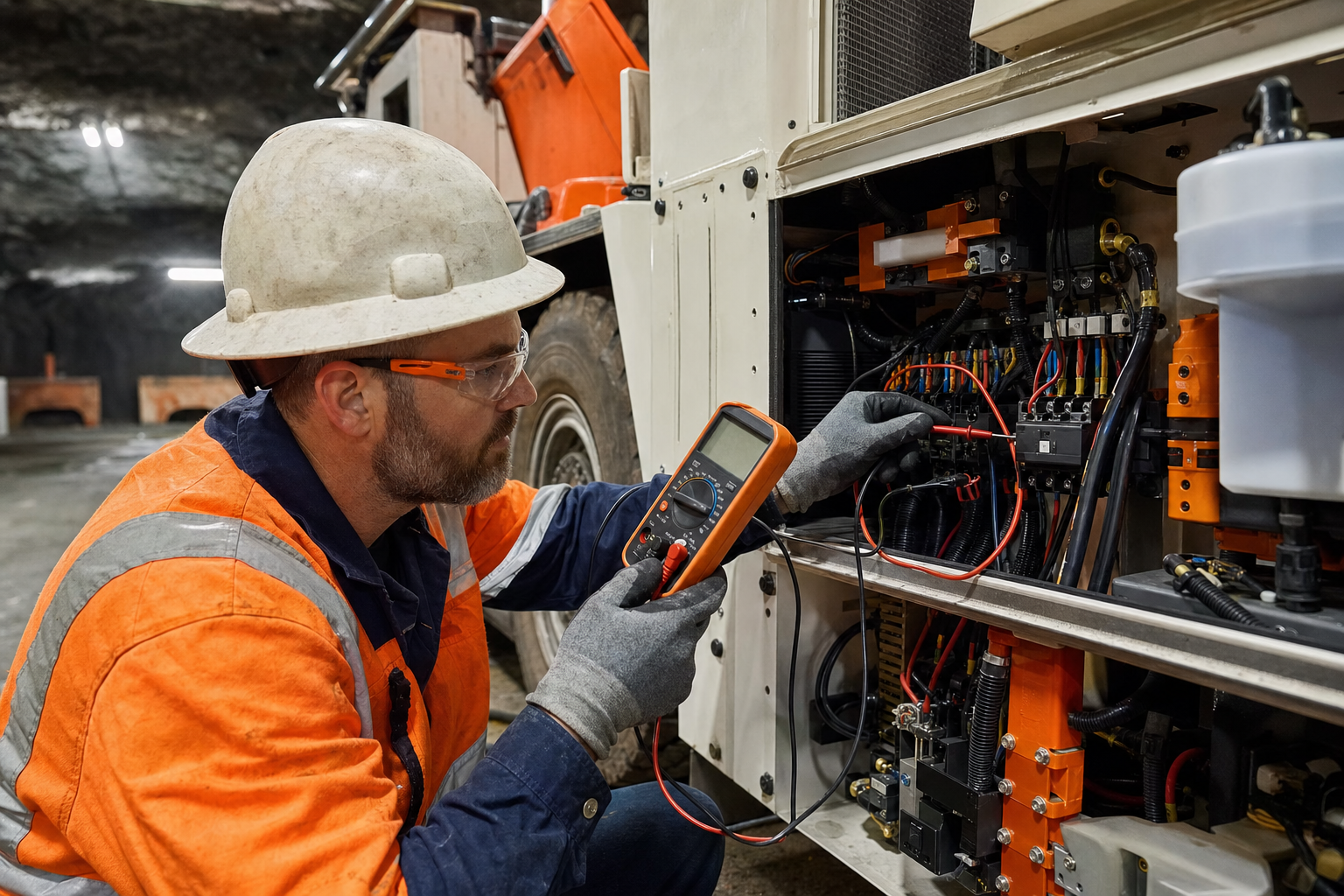
No Heat: Furnace Locks Out After Power Interruption
This is the most common call on MSHA-rated fuel-fired heaters. When power cuts during operation, the thermal switch trips and stays open. The furnace won’t respond to the thermostat until you reset it manually. Open the cabinet, locate the thermal switch (a small disc-shaped safety device on the heat exchanger), and press the reset button firmly until you hear a click. The furnace should fire within one heating cycle.
If it trips again quickly, the heat exchanger may be running too hot due to restricted airflow. Check the filter first. A clogged filter starves the blower and causes the heat exchanger to overheat on every cycle.
No Heat: Ignition Lockout (Four-Flash Fault Code)
Four flashes on the control board typically means the igniter tried and failed. First, check the igniter with a multimeter set to continuity. An open reading means the igniter is broken even if it looks intact visually. Replace it with the correct hot-surface igniter for your unit.
If the igniter reads good but still won’t glow, check the pressure switch. Blow gently through the port hose. If the switch doesn’t click, it’s stuck open. A blocked condensate drain or a cracked inducer housing can also prevent the switch from closing.
No Heat: Flame Sensor Contamination
If the igniter glows, the gas valve clicks, but the burner shuts off within seconds, the flame sensor is the likely cause. Slide the burner assembly out, locate the sensor rod (it sits in the flame path and will show white oxidation at the tip), and clean it lightly with a fine wire brush. Reinstall and test. This fix costs nothing and takes under 20 minutes.
No Cool: Condenser Fan Not Spinning
If the compressor is running but the unit blows warm air, go to the condenser section first. A fan that won’t start despite the motor humming points to a failed run capacitor. Discharge the capacitor safely before handling it. Replace it with a unit matching the original microfarad and voltage rating. This is typically a fix that restores full cooling immediately.
Reduced Airflow or Pressure Loss
A drop in cabin pressurization on an MSHA-rated system is a compliance issue, not just a comfort issue. Check the pre-cleaner, primary filter, and any duct connections for blockage or damage. A cab that can’t maintain 20 Pa of positive pressure no longer meets ISO 23875 requirements and should be taken out of service until the filtration system is restored.
Selecting and Installing MSHA-Rated Mobile HVAC Systems
Selecting the wrong unit is expensive. A standard commercial HVAC system might physically fit a haul truck cab, but it won’t carry MSHA Part 6 approval, won’t handle the vibration and dust loads of a mine site, and won’t meet ISO 23875 filtration requirements. Here’s how to spec correctly.
Verify MSHA Part 6 Approval Before Anything Else
Ask the supplier for the MSHA product approval number. Look it up on the MSHA database. If the supplier can’t provide it, the unit isn’t MSHA-rated regardless of what the spec sheet says. This single step eliminates most of the compliance risk at the procurement stage.
Match the Power Architecture to the Machine
Hydraulic-driven systems are the right choice for most underground and surface mining equipment because they don’t require a separate electrical power source and carry no ignition risk from electrical components in hazardous atmospheres. High-voltage electric systems are appropriate for electric drive machines or where hydraulic tap-off isn’t available. Never retrofit a system designed for one power architecture onto a machine that wasn’t designed for it.
Account for Confined Installation Spaces
Underground mining equipment often has very limited cab space. Measure the available envelope carefully before specifying a unit. Modular systems that separate the condenser from the evaporator give more flexibility in tight installations. Duct routing matters too. A poorly routed flex duct that kinks under cab movement will reduce airflow and trigger pressure alarms within weeks.
Polar Mobility Research Ltd. offers custom builds for applications where off-the-shelf dimensions don’t fit. If the unit doesn’t exist in standard form, we’ll build it. That’s not a marketing line. It’s how we handle the applications where standard catalogs fall short.
MSHA-Rated vs. Standard: A Quick Decision Guide
Maintenance and Record-Keeping for MSHA Certification
An MSHA-rated system that isn’t maintained to spec can lose its effective compliance status even if the original approval is valid.
An HVAC system that fails mid-shift isn’t just a comfort issue. It affects operator alertness, visibility (defogging and deicing), and air quality in enclosed cabs.
Minimum Maintenance Intervals
- Pre-shift check:Confirm cabin pressurization indicator is in the green range. Check that all vents are unobstructed and the pre-cleaner is clear.
- Weekly:Inspect the primary filter for loading. In high-dust environments, filters can reach restriction limits in days, not months.
- Monthly:Clean or replace the flame sensor on fuel-fired heaters. Inspect the inducer motor housing for cracks. Test the thermal switch reset function.
- Quarterly:Full system pressure test on the cab enclosure. Check all duct connections and door seals. Verify the capacitor on the cooling side with a capacitor tester (not just visual inspection).
- Annually:Full system inspection against the original MSHA approval documentation. Replace filters to OEM specification. Log all findings.
Record-Keeping That Holds Up in an Audit
Every maintenance action on an MSHA-rated mobile HVAC unit should be logged with the date, technician name, unit serial number, parts replaced, and test results. A well-structured fleet maintenance program keeps those records accessible and timestamped. Managing maintenance documentation across a large fleet follows the same discipline as any structured compliance program: consistent formats, clear ownership, and regular audits of the records themselves.
Operators should also log any in-cab air quality readings. ISO 23875 requires real-time monitoring of CO₂ and cabin pressure, and those readings should feed into a maintenance trigger system. If CO₂ climbs above ambient plus 400 ppm, the ventilation system needs attention before the next shift, not at the next scheduled service interval.
Polar Mobility Research Ltd. can supply replacement filters, sensors, and components that match the original MSHA approval documentation for our systems. Using non-OEM components on an MSHA-approved unit can void the approval, so sourcing matters as much as the maintenance schedule itself.
FAQ
What does MSHA Part 6 approval mean for mobile HVAC equipment?
MSHA Part 6 is the product approval process that certifies specific equipment designs for use in mining environments. For mobile HVAC, it means the unit has been reviewed and approved by MSHA before installation on mining machinery. Without a valid Part 6 approval number, a unit is not legally MSHA-rated for use in regulated mining operations, regardless of how it performs technically.
How do I reset an MSHA-rated mobile furnace after a power outage?
After a power interruption, the thermal switch in the furnace heating circuit often trips and stays open. Open the furnace cabinet, locate the thermal switch on the heat exchanger, and press the reset button until you hear a click. The furnace should then respond to the thermostat normally. If it trips again quickly, check for a clogged filter restricting airflow over the heat exchanger.
Can I use a standard commercial HVAC unit on mining equipment?
No. Standard commercial units lack MSHA Part 6 approval, are not built to handle mine-site vibration and dust loads, and typically don’t meet ISO 23875 filtration or pressurization requirements. Using an unapproved unit in a regulated mining environment creates compliance liability and puts operators at risk. Only systems with documented MSHA product approval should be installed on mining machinery.
How often should the flame sensor be cleaned on heavy-duty mining equipment?
The flame sensor should be inspected monthly and cleaned whenever white oxidation buildup is visible on the rod tip. In high-cycle applications like mining equipment that runs long shifts in cold environments, cleaning every 30 days is a reasonable baseline. A contaminated flame sensor causes the burner to light and then shut off within seconds, triggering a no-heat lockout that’s easily mistaken for a gas valve or igniter failure.
What PPE is required when servicing mobile HVAC on a mine site?
Technicians must wear high-visibility reflective vests at minimum. Insulated gloves are required when working near capacitors or electrical components. Safety glasses protect against debris when accessing filters or cleaning burner assemblies. Site-specific PPE requirements may add hard hats, steel-toed boots, or respiratory protection depending on the mine’s hazard assessment and the MSHA Part 46 safety program in effect at that location.
How does ISO 23875 relate to MSHA compliance for cab HVAC?
ISO 23875 sets international performance standards for cab air quality in mining and earthmoving equipment, covering maximum CO₂ levels, respirable particulate limits, and minimum cabin pressurization. MSHA compliance and ISO 23875 overlap significantly for operator cab environments. Meeting both gives operations stronger audit standing and better protects operators from long-term exposure to airborne contaminants in enclosed cabs.
Conclusion
Getting mobile HVAC right in a mining environment means more than buying a unit that fits the cab. It means verifying MSHA Part 6 approval, understanding the components that fail most often, and keeping maintenance records that hold up under inspection. Polar Mobility Research Ltd. builds hydraulic-driven and high-voltage HVAC systems specifically for these environments. If your current equipment doesn’t carry a valid approval number, or if you’re speccing a new machine, contact us to get a system that was designed for the conditions you actually work in.