
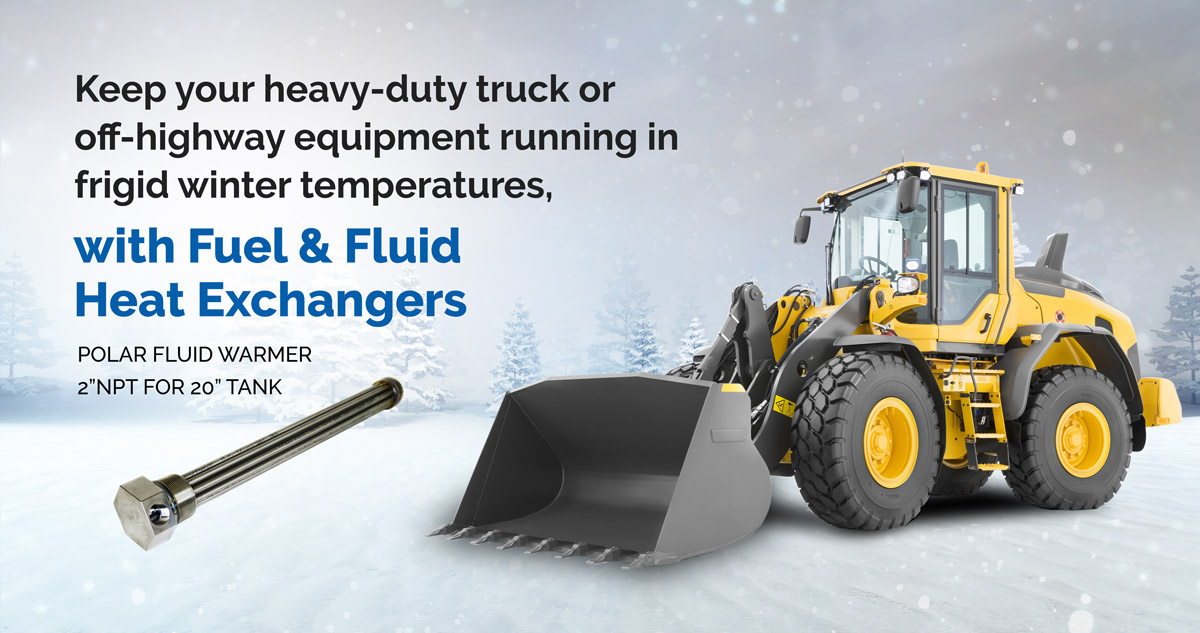
Fuel and fluid heat exchangers pass heat from one fluid to a second fluid without coming into direct contact with each other. This exchange requires rapid fluid flow rates to reduce pressure loss and facilitate heat transfer through forced oscillation. The efficiency of the unit depends on how well it can transfer heat while minimizing pressure losses.
Heat exchangers are used to transfer heat from systems where heat is not needed to other systems where heat can be used effectively. They are also used to prevent equipment from overheating and as a mobile equipment heating solution for remote sites across Canada. Whether you’re in Alberta or Ontario, a heat exchanger can prove to be beneficial for your operations.
The benefits of fuel and fluid heat exchangers
Think of a building or an exhaust billowing smoke to get rid of waste heat – this is energy that can be used for other purposes that require heat, whether to keep operators comfortable or to preserve equipment.
When it comes to commercial mobile units, fuel and fluid heat exchangers:
- Protect equipment by preventing fuel gelling when temperatures drop low
- Eliminate the need to purchase cold-weather additives and costly blended feels
- Improve a company’s energy efficiency
- Reduce fuel usage and emissions
- Help workers stay comfortable, safe, and productive
Industry-leading names in fuel and fluid heat exchangers
Arctic Fox
Arctic Fox has long been a top brand name when it comes to supplying high-quality fuel and fluid warming products. Arctic Fox heat exchangers are a solution for operations that rely on dependable engine starts, even in the most frigid of weather conditions, including utility trucks, plow trucks, work trucks, and off-highway vehicles.
Some of the advantages of these efficient fuel and fluid heat exchangers include:
- A range of sizes available to fit all machinery, including compact units
- Durable and made of 100% stainless steel
- Pump wear and cavitation are reduced because hydraulic fluid stays warm
- Natural gas going below an acceptable temperature is prevented, based on the load and engine temperature
Polar Mobility
Polar Mobility has been researching and developing industrial and commercial mobile heating solutions for heavy-duty equipment since 1981. We offer customized solutions that can be designed for specific worksites and applications. The team takes the time to ensure that the fuel and fluid heat exchangers fit the reservoir or tank so that the unit continues to work efficiently.
Some of the advantages of Polar Mobility’s heat exchangers include:
- Low internal resistance to glycol, making them ideal for fuel-fired engine coolant heaters
- Stainless steel design that can handle harsh working environments
- Quality designing eliminates overpressurization within the unit
Companion products of fuel and fluid heat exchangers
Companion products are used to help boost coolant flow and keep the equipment running in cold weather conditions.
- Coolant Circulation Pump – Used for applications that require lengthy plumbing, multiple tank installations, or multiple heat exchangers. Coolant circulation pumps increase the flow of coolant, helping the unit run more efficiently.
- Coolant Manifolds – Helps distribute coolant through multiple heat exchangers.
- Pre-Assembled Insulated Sleeved Coolant Hoses – Insulated sleeves protect the area between the fuel tank and engine and help maintain the fuel and coolant lines at optimum temperatures.
Choosing the right fuel and fluid heat exchanger
At Polar Mobility, we supply some of the industry’s top mobile heating and cooling products, including fuel and fluid heat exchangers. If you can’t find what you’re looking for in our catalog, give us a call and we can customize a solution for your specific worksite or equipment.