
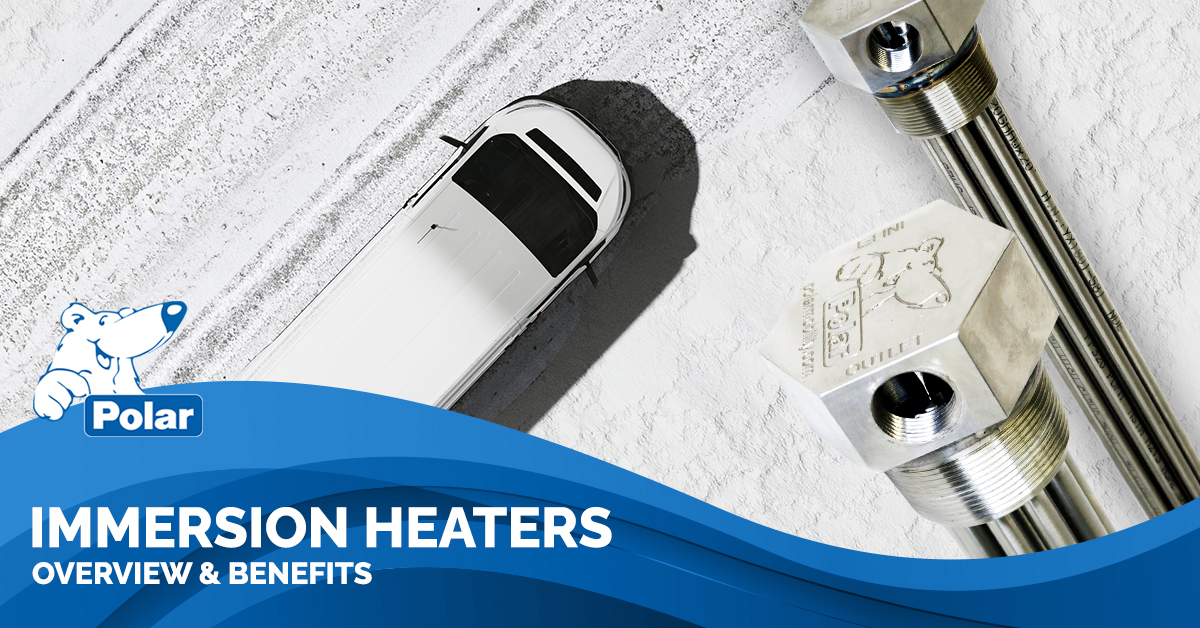
Immersion heaters provide one of the most efficient methods for heating liquids. Using direct heat transfer, immersion heaters can be mounted on the side of a container or inserted into tanks, vats, containers, and any equipment that carries water, oil, or other material. Immersion heaters are also referred to as a hydraulic tank heater, hydraulic oil heater, hydraulic fluid heater, and bayonet heater.
How an immersion heater works
There are two types of immersion heaters: direct and indirect.
- Direct immersion heater: In this type of unit, the heating element is placed directly in the liquid. Once the heater is turned on, electricity runs through the heating element and quickly heats the liquid.
- Indirect immersion heater: This type of unit does not have direct contact with the liquid, which prevents contamination and corrosion. An indirect immersion heater uses either radiation or convection to heat the material.
The benefits of using an immersion heater
Industries such as nuclear power, oil and gas, wastewater management, transportation, food processing, agriculture, construction, and mining, to name a few, rely on immersion heaters for their clean source of energy, ability to heat the material quickly, and maintain safe conditions without the use of flame.
Some of the benefits of immersion heaters include the following:
Efficient and rapid heat transfer – Immersion heaters are designed to transfer energy directly into the medium, making them one of the fastest heat transfer methods available. Their basic, compact design provides rapid heat transfer and distribution and can reach the target temperature quickly.
Cost-effective – Compared to other heating methods, immersion heaters are an inexpensive way to heat large quantities of liquid. They require very little maintenance and are easy to clean with minimal downtime for repairs.
Simplicity and ease of use – Immersion heaters have a straightforward design that works for a wide variety of materials and can be adapted and retrofitted for existing equipment. Easy installation without stopping operation means less downtime and no need to replace existing equipment.
A safe and clean energy source – For many industries, the use of fuel and flame to heat material is prohibited or limited for safety reasons. Since immersion heaters are powered by electricity, they do not produce emissions or waste. With rising fuel costs, immersion heaters can help companies improve their bottom line and reduce their carbon footprint.
Where to find immersion heaters for your industry
At Polar Mobility, we stock an inventory of immersion heaters. We can also help customize a solution for your specific worksite or equipment. Whether you need to heat material quickly, maintain a specific temperature, or require freeze protection during Canada’s frigid winters, give us a call, and we can help.