
With winter just around the corner, freezing temperatures can turn your equipment’s hydraulic oil, coolant, and fuel into a costly problem—especially for fleets relying on mobile equipment to stay productive in cold conditions. Without proper protection, thickened or frozen fluids make cold starts harder, slow down operations, increase service calls, and can lead to serious component damage.
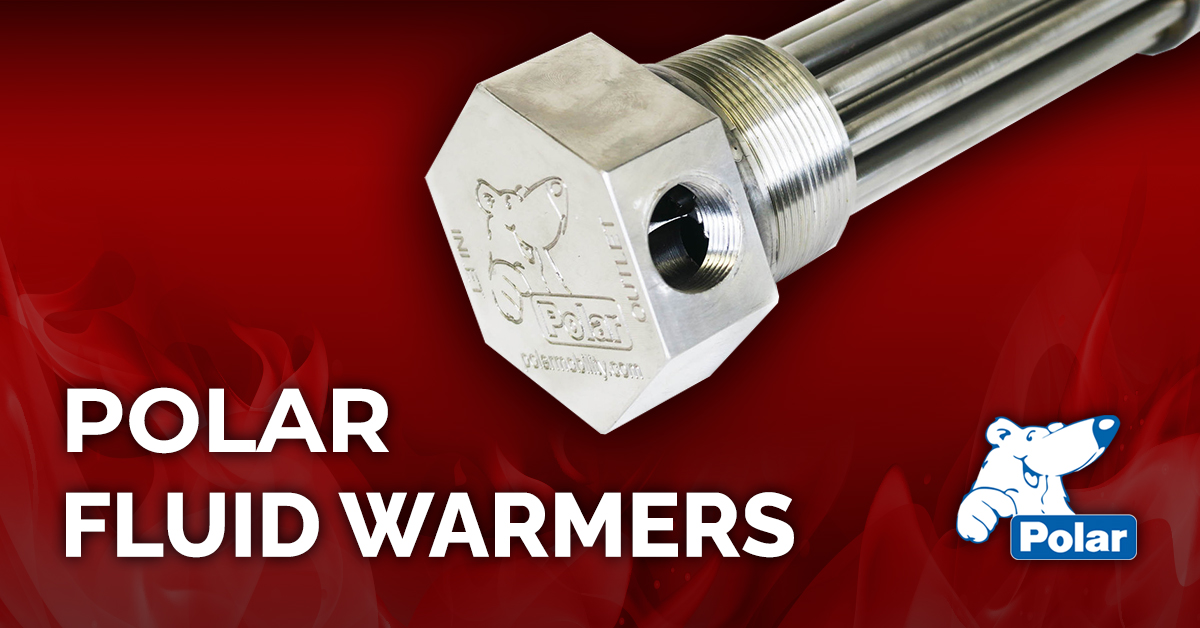
That’s where Polar Fluid Warmers come in. Designed as a purpose-built immersion heater for mobile systems, Polar Fluid Warmers help maintain proper fluid temperatures, reduce winter downtime, and keep critical systems operating reliably when temperatures drop.
Why Frozen Fluids Are a Serious Problem for Mobile Equipment
In cold climates, fluid viscosity increases as temperatures fall. Hydraulic oil becomes sluggish, fuel can gel, and coolant systems struggle to circulate properly. The result is more than inconvenient—it can lead to lost productivity, increased wear on pumps and seals, and a higher risk of breakdowns during cold starts.
For fleet managers and equipment owners, these issues often show up as:
- Long warm-up times
- Increased maintenance and repair costs
- Reduced equipment availability during peak winter operations
Polar Fluid Warmers are designed to prevent these problems before they start.
How an Immersion Heater Works
Direct Immersion Heaters
The heating element is placed directly in the liquid. Coolant flows through the component, quickly heating the fluid.
Indirect Immersion Heater
This type of unit uses either radiation or convection to heat the liquid. The heating element does not have direct contact with the liquid, preventing contamination and corrosion.
While immersion heaters come in many forms, Polar Fluid Warmers are designed specifically for mobile equipment operating in extreme cold, where reliability, durability, and compatibility with existing systems are essential.
Common Types of Immersion Heaters
Over time, immersion heater designs have evolved to serve a wide range of industrial applications. Some of the most common types include:
Screw Plug Immersion Heaters
A hairpin-shaped electric element is inserted directly into the tank wall or pipe for heating. Screw plug immersion heaters are ideal for small tanks or applications needing precise heat control. This type of heater is commonly used in industrial tanks, barrels, and pipes to regulate temperature and protect equipment.
Over-the-Side Immersion Heaters
This hydraulic tank immersion heater can be mounted directly to the tank or vessel, making it ideal for water storage, preventing fluid thickening, freeze protection, and more. Over-the-side immersion heaters are widely used for larger applications.
Flange Immersion Heaters
These immersion heaters are mounted to the outer wall of a tank by bolting or welding and can reach temperatures up to 650°C. They’re ideal for industrial process heating, boilers, oil, and other high-pressure applications.
Circulation Immersion Heaters
Installed in-line or in piping systems, these heaters are ideal for freeze protection and for heating water, steam, air, and gas.
Not all of these designs are suitable for mobile or cold-weather applications, which is why purpose-built solutions like Polar Fluid Warmers are preferred for winter equipment protection.
The Benefits of Using Polar Fluid Warmers
For equipment operating in winter conditions, immersion heaters provide reliable freeze protection without open flame, reducing maintenance risks and unplanned downtime. Polar Fluid Warmers are designed to deliver measurable, real-world benefits, including:
- Reduced Downtime – Keeps fluid warm and flowing, minimizing cold-start failures
- Faster Cold Starts – Maintains proper viscosity for hydraulic oil, fuel, and coolant
- Extended Component Life – Reduces stress on pumps, seals, and system components
Industries such as construction, mining, agriculture, transportation, oil and gas, and wastewater management rely on Polar Fluid Warmers to keep equipment running reliably through harsh winter conditions.
Key Features of Polar Fluid Warmers
Design & Construction
- 304 stainless steel construction
- 2-inch male NPT thread or single-thread O-Ring
- ¾-inch and single female NPT glycol ports
- Suitable for horizontal or vertical installation
Fluid & System Compatibility
- Compatible with water, hydraulic fluids, and fuel oils
- Low internal glycol resistance, making it an ideal pairing with fuel-fired engine coolant heaters
Performance & Durability
- Pressure tested up to 300 psi
- Recommended working pressure of 150 psi
- Available with tank weld flanges in aluminum, stainless, and mild steel
Scalability & Flexibility
- Can be used in multiple units for larger tanks or faster heat-up
- Suitable for various tank and reservoir sizes
Warranty
- Backed by a five-year limited warranty
Prepare Your Equipment Before the Deep Cold Hits
As temperatures drop, preparing your equipment now can help prevent costly winter failures and unexpected downtime. Polar Fluid Warmers provide a reliable solution for keeping hydraulic oil, water-based fluids, and other fluids at optimal temperatures—no matter how cold it gets.
Contact Polar Mobility today to learn how Polar Fluid Warmers and other immersion heaters can help protect your equipment and keep your operations running smoothly all winter long.